


Unmanned Ship to the Rescue – Loose Cannon
Cruisers Net publishes Loose Cannon articles with Captain Swanson’s permission in hopes that mariners with saltwater in their veins will subscribe. $7 per month or $56 for the year; you may cancel at any time.


When all else fails, try journalism.
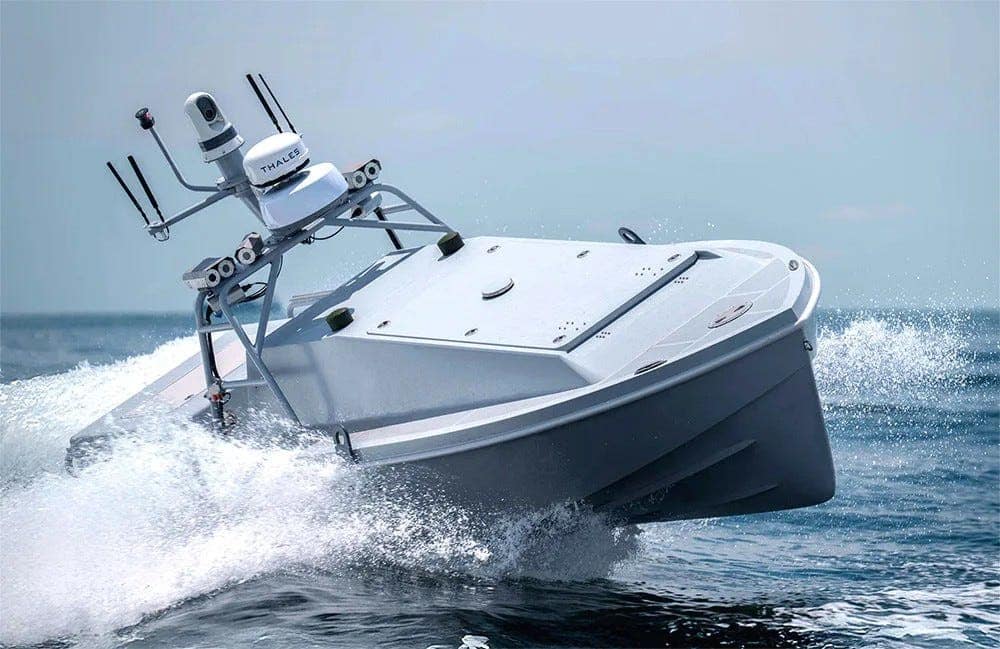
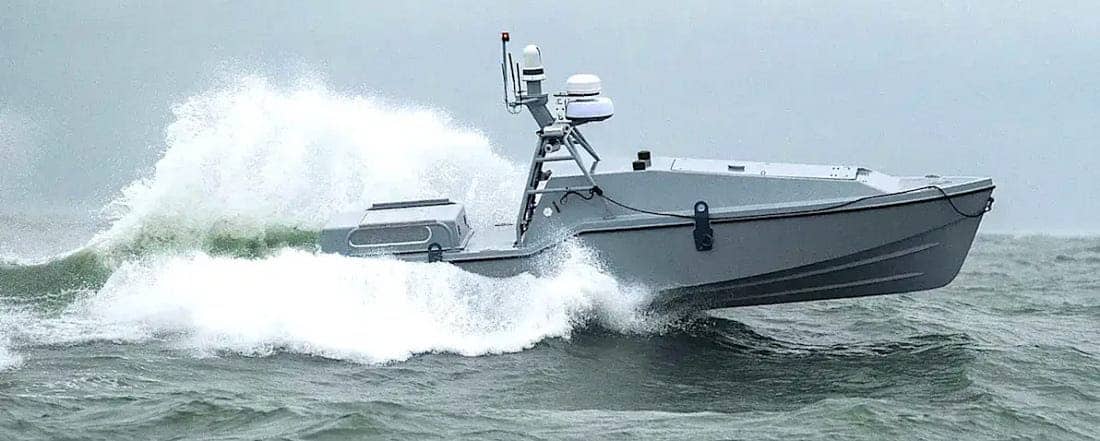
We have just seen the future of search and rescue at sea. “Proof of concept,” as one retired Coast Guard rescue swimmer just said. Yesterday, a Saronic Corsair 24 “uncrewed surface vessel” rescued the two-man crew of a U.S. Army Apache helicopter downed in the Gulf of Oman, marking the first known use of a drone boat in a search-and-rescue mission. The surface drone—aka an unmanned surface vessel—is part of the U.S. Navy’s Task Force 59, which is operating various uncrewed platforms, including the Corsair, during its Iran War deployment. When the Iranians shot down the Apache, a sister ship of the boat above was sent to the survivors’ known location. The former commander of Task Force 59 told the Telegraph news outlet that the unit had trained for this kind of thing. “We thought it was possible, and we practiced in benign situations,” Michael Brasseur said. “But to execute in a contested environment like that, it’s a very fulfilling moment for me personally.” The unanswered question is: How did the men get up onto the superstructure for their ride to safety? News descriptions were conclusory. The men “scrambled onto” or clambered up onto” the slab-sided vessel. As anyone who has tried to get onto anything steeper than a canoe—absent a ladder or swim platform—would testify, scrambling and clambering takes a fair bit of athleticism. We can assume the pilots were fit, but they had probably been shaken up by their crash into the sea, and their inflatable PFDs would have made the ascension nigh impossible without first being deflated, as SAR demos have shown. There are no obvious steps or handholds on the publicity photos distributed by Saronic itself did not answer an email asking how the men would have been expected to board the boat. Uninjured and highly motivated, the two men had undoubtedly been trained on how the Corsair operates and how to board one of them, according to Mario Vittone, a veteran Coast Guard rescue swimmer, now retired. What works with uninjured military people may not succeed with wounded individuals or a retired couple who have just abandoned their sinking sailboat, but give it time. The addition of steps, handholds and robotic lifts will come. Even at this early stage, the benefit of unmanned rescue has justified future improvements. Even without refinement, the Corsair already has greater range than most rescue helicopters and can be deployed from all manner of ships. “They just had a lovely proof of concept, and they’ll be on cruise ships and commercial ships after that,” Vittone said. “I think all offshore searching will be done by fully autonomous drone (airborne) at around the same time. Give it a decade. Max.” Each Corsair costs $1 to $1.2 million. According to Saronic, the Corsair is designed for multiple missions, including combat:
LOOSE CANNON covers hard news, technical issues and nautical history. Sometimes he tries to be funny. Subscribe for free to support the work. If you’ve been reading for a while—and you like it—consider upgrading to paid. |








Be the first to comment!