June is the beginning of the summer season in South Carolina with the summer solstice happening on June 21st. The summer solstice marks the longest day, or hours of sunlight during a day, that the Northern Hemisphere will receive in the year. The exact number of hours experienced will depend on the viewer’s exact location, but if you are located within South Carolina you should expect to have just over 14 hours of daylight from sunup to sundown.
We will get to observe some thrilling and exciting changes in wildlife activity this month. Aves, or birds, are active during this time of year. Along the coast, shorebirds may be seen sitting on nests. In places like Botany Bay Heritage Preserve, it may be possible to spot an American oystercatcher in the distance by scanning the dunes for its bright orange beak. Nesting areas may be marked by similarly-colored bright orange tape. Observing shorebirds from a distance, especially during nesting season, is encouraged. This time of year, species like brown pelicans, royal terns, sandwich terns, least terns, black skimmers, and American oystercatchers are settling down atop their nests. These nesting colonies will often be behind some type of barrier where they are being protected as well as monitored by scientists. To get a closer look, I would recommend a good pair of 10 x 42 binoculars or your favorite camera, or even phone with a zoom lens attached. Report your findings to iNaturalist or eBird as well to contribute valuable citizen science data! Maybe if you find a passion in reporting birds you can become one of the famous “listers” — a person who meticulously reports and seeks out different species of birds, or maybe you might find a new “lifer” — or a bird seen by you for the first time in your life.
Nature photography day is June 15th! This day was created by the North American Nature Photography association and highlights the importance of photos in telling a conservation story and in research, as well as the value of it as a nature-based activity that can be enjoyed but all people, equipment and skill level aside. Get outside and explore a new public land, with a camera of any type in hand.
Red-winged blackbird, Photo by Allison DeVore
A note from Allison DeVore SCDNR Photographer and Videographer. “Every shoot brings something new, whether that’s a species I’ve never encountered or a person I’ve never met, and that’s what keeps it interesting. I love getting to tell the stories of SCDNR.” The photo of the red-winged blackbird was taken at Donnelley WMA and is one of Allison’s favorite photos that she has taken.
American Oystercatcher
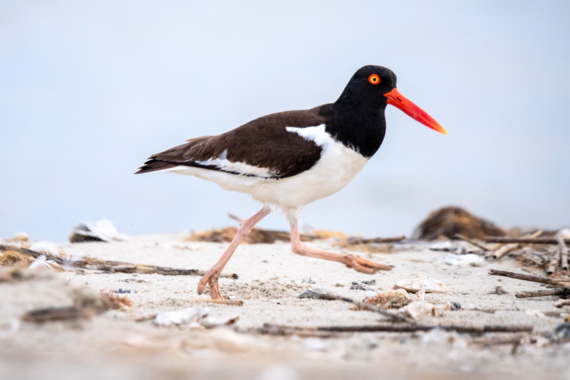
American Oystercatcher, Photo by Kaitlyn Hackathorn
The American Oystercatcher (Haematopus palliatus), found in South Carolina, is a shorebird species with a remarkable conservation success story. In 2008, the U.S. Atlantic and Gulf coast’s population estimate was 10,000 individuals. Surveys in 2023 counted 14,000 oystercatchers, an increase of 43 percent! As its name suggests, the American oystercatcher primarily feeds on oysters, mussels, clams and other marine invertebrates. Its bill, that is shaped like an oyster knife, allows it to access food sources unavailable to many other shorebirds that lack this specialized oyster opening adaptation. Habitat loss and alteration have long been major challenges for the species. American oystercatchers show strong site fidelity, often returning to the same nesting beach season after season, despite changes to those habitats over time. Conservation efforts that have contributed to the species’ recovery include habitat management for invasive species, restrictions on disturbance from domestic pets, protective buffers around nesting sites, and the creation and restoration of oyster reefs. This recovery effort has been a collaborative initiative involving state agencies, nonprofit organizations, and individuals along the Atlantic and Gulf coasts. Although the population has increased, the species still faces ongoing threats such as storms, nest disturbance, and beach erosion and loss. The story of the American oystercatcher, like that of South Carolina’s wildlife as a whole, remains an ongoing one that requires continued attention, collaboration, and support from both environmental institutions and the public.
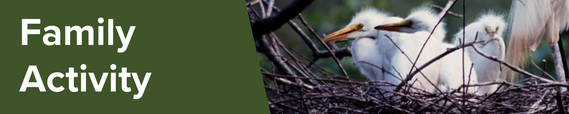
Looking for a fun activity geared toward kids or a school group? Learn how to make a pinhole camera!
Deveaux Bank Seabird Sanctuary
Deveaux Bank, Photo by Kaitlyn Hackathorn
Please be aware that The S.C. Department of Natural Resources’ (SCDNR) Deveaux Bank Seabird Sanctuary is completely closed March 15-October 15 to protect coastal birds during the nesting season.
Deveaux Bank Seabird Sanctuary was established to protect significant nesting habitat of sea and shorebirds. Located at the mouth of the North Edisto River in Charleston County, Deveaux Bank Seabird Sanctuary encompasses approximately 215 acres of sandy beaches, vegetated dunes, broad marshes and intertidal shoals. The size of this sanctuary varies, and it may sometimes disappear entirely. The location of Deveaux Bank as an estuarine island was first documented in 1921, and it was documented as a seabird rookery in the 1930s. During World War II, nesting was temporarily interrupted due to the island’s use as a bombing range. Deveaux Bank is part of a dynamic system; it completely subsided in 1980 due to erosion from Hurricane David and then slowly reemerged to provide seabird nesting habitat again in 1983.
Deveaux Bank’s maritime grassland community lives on unstable sand dunes elevated above the highest flood mark. The grassland community is dominated by Russian thistle and marsh hay, which grow along with camphorweed, beach elder, beach tea and dog fennel.
Deveaux Bank supports colonies of nesting waterbirds because of its isolated nature and lack of mammalian predators. Although all species may not nest on the island each year, examples of species that have used the island include brown pelican, least tern, royal tern, black skimmer, gull-billed tern, sandwich tern, common tern, laughing gull, Wilson’s plover, American oystercatcher, willet, great egret, snowy egret, tricolored heron and white ibis.
The colonial nesting behavior of these birds makes them very susceptible to disturbance. Birds are densely packed into breeding sites during the nesting season, rendering the entire rookery susceptible to disruption or destruction. In addition, migratory and wintering shorebirds and seabirds need periods of rest and foraging free from disturbance to survive long journeys and inclement weather. The sand flats and mud flats located in the interior of the island provide feeding and loafing habitat for numerous shorebird species including red knot (federally threatened), piping plover (federally threatened), sanderling, dunlin, short-billed dowitcher, marbled godwits and many others.
In recent years, Deveaux Bank made national headlines as SCDNR biologists discovered the largest known concentration of Hudsonian whimbrels, a rare curlew species, using the site as a nocturnal roost on their spring migration. Due to its critical importance for whimbrels, as well as other migrating shorebirds, Deveaux Bank was designated as a Western Hemisphere Shorebird Reserve Network site of international importance in 2024.
SCDNR events often require pre-registration to attend. Please click on the respective links and ensure you are signed up before attending.
Saltwater Fishing Clinics
Many dates and locations are available this month!
These clinics will teach you how to tie knots, rig your rod, how to cast, what bait to use, and what fish you can catch in saltwater! Find all dates and other events at the SCDNR Fishing Outreach Eventbrite.
Freshwater Fishing Clinics
Many dates and locations are available this month!
These clinics will teach you how to tie knots, rig your rod, how to cast, what bait to use, and what fish you can catch in freshwater! Find all dates and other events at the SCDNR Aquatic Education Eventbrite.
Ironclad Anglers Fishing Rodeo, Colonial Lake, Charleston County
Saturday, June 6th, 8:30 a.m. to 11:30 a.m.
Come join SCDNR and the City of Charleston for a hero-themed saltwater fishing rodeo at Colonial Lake. Youth 15 and under. Register here
Hikes with a Naturalist, Ashmore HP & WMA, Greenville County
Saturday, June 20th, 8:00 a.m. to 11:00 a.m.
Hikes with a Naturalist are introductory explorations into the natural world around us. These hikes will cover topics ranging from local wildlife and fishes to best hiking practices and land management. Register here
Red Snapper 101- Charleston County
Monday, June 29th, 6:00 p.m. to 8:00 p.m.
Red Snapper 101 will be taught by SCDNR staff, fishing professionals, and Shimano staff. We will go over the new updates, fish ID, and more.
The Red Snapper class goes over the new regulations, reporting system, season, fishing techniques, and fish ID. This class will teach you everything you would want to know about red snapper. Kids from ages 6 to adults are welcome, so come out to Shimano’s classroom and enjoy the class! Register here
About Us:
Conservation Education is a section within SCDNR’s Office of Education, Outreach, and Information. Our goal is to connect South Carolinians and visitors to public lands to help them live life outdoors. Our educational programs offer lessons on wildlife, fisheries, forestry, land management, watersheds, and environmental history.

 American Oystercatcher, Photo by Kaitlyn Hackathorn
 Looking for a fun activity geared toward kids or a school group? Learn how to

 SCDNR events often require pre-registration to attend. Please click on the respective links and ensure you are signed up before attending.





Be the first to comment!