I personally use Kanberra products on my boat and can attest to their effectiveness.
Say goodbye to odors, not style.
Introducing the New Barely There Bundle – a minimalist’s dream come true.
Our fragrance-free and family-safe solution eliminates unwanted smells in any space, from your sleek kitchen to your cozy camper. Designed to blend seamlessly into its surroundings, it’s the understated elegance you’ve been searching for.
For August only: $75 (reg. $125) gets you:
24oz Kanberra Gel Refill Pouch
2 x 6oz + 2 x 3oz Barely There Jars
All-natural, toxin-free, and refillable. Because clean air shouldn’t mean clutter or chemicals.
From our friends at South Florida Sun Sentinel, if you are near Fort Lauderdale this weekend consider spending time at the Beachfront Grand Prix Festival.
Here’s what forecasters think the rest of 2025 hurricane season will look like
A satellite image of Tropical Storm Chantal approaching the coast of the Carolinas, taken by NOAA's GOES-19 satellite on July 5, 2025. (Courtesy NOAA Satellites)
The National Oceanic and Atmospheric Administration issued an August update to its 2025 hurricane season outlook, slightly lowering its prediction for how many storms to expect.
However, the forecast still calls for this year to have an above-average season, and conditions are aligning for more tropical activity as we enter the peak hurricane period.
On Thursday, NOAA said it adjusted the range of named storms from 13 to 19 down to 13 to 18. There have been four named storms so far this year and no hurricanes.
It similarly adjusted the number of hurricanes down to five to nine overall, and lowered the low end of major hurricane numbers by one, to two to five.
The May forecast predicted there was a 60% chance of an above-normal hurricane season. That probability has been lowered to 50%.
Though numbers have been adjusted down, the season is entering its peak period and ocean and atmospheric conditions still favor an above-normal season, said the report.
The prediction of an above-average remainder of the season is based on a combination of factors, including warmer-than-average sea-surface temperatures in the tropical Atlantic Ocean and Caribbean Seas, and an active West African Monsoon.
There is neither an El Niño nor La Niña this summer. El Niños tend to increase wind shear over the Atlantic, which can topple hurricanes. La Niñas tend to reduce wind shear.
“Many of the factors we identified ahead of the season are still at play, and conditions are largely tracking along with our May predictions,” said Matt Rosencrans, lead hurricane season forecaster with NOAA’s National Centers for Environmental Prediction, part of the National Weather Service.
Other factors that tend to accelerate hurricane likelihood from August through October include the dissipation of Saharan Dust. Large plumes of dry desert dust travel across the Atlantic in early summer, but tend to fade in August.
West African monsoons, which develop farther south on the continent, also begin traveling into the tropical Atlantic more frequently at this time of year. Those systems can develop into tropical cyclones.
NOAA emphasized that the outlook is not a landfall forecast since short-term weather patterns influence landfall quickly.
What’s Happening In Your Parks – Charleston County Parks
Take Your Pick
What’ll it be: get gussied up for a night of dancing? Or chill out at the pool? On August 9, people with disabilities and their families and caregivers can choose between two awesome evenings: the Out of This World Inclusive Prom or Inclusive Swim Night. There’s no wrong choice, just fun vibes all around!
Ease Your Body & Mind
Discover the power of gentle, mindful movement to support your body and soothe your nervous system. Our Gentle Yoga Flow series is designed to introduce older adults to new experiences and improve flexibility, balance, and range of motion—while cultivating a deep sense of calm and overall wellbeing. Perfect for beginners and those with physical limitations, this class welcomes all bodies and all abilities in a supportive, inclusive space. Ready to move with more ease? Join us and experience how small, intentional movements can make a big impact. Register now to reserve your spot!
Mark Your Calendar
Gear up to ace the new school year at our annual Back to School Kickoff! On August 23, join us at the Lincoln Regional Center for a fun, entertaining afternoon complete with a school supplies giveaway, face painting, jump castles, and a DJ spinning awesome tunes.
Seashells By the Seashore
Catch more than waves at the beach this month on a Seashore Exploration walk. Our naturalist will teach you how to look for the intriguing non-human critters who hang out at the beach this summer, like molluscs, corals, and more. Reserve your spot today.
School’s in Session
Get your students out of the classroom and into the parks with our cool school programs! Our park educators offer hands-on learning you can integrate into your curriculum to keep kids active and engaged. Can’t get out to the parks? Our virtual education programs may be just right for you!
Cruisers Net is proud to be a member of the Atlantic Intracoastal Waterway Association, whose lobbying work is crucial to keeping the Waterway navigable and safe. Your membership dollars directly support their vital work. Please join and encourage your boating neighbors to do the same, regardless of their home port.
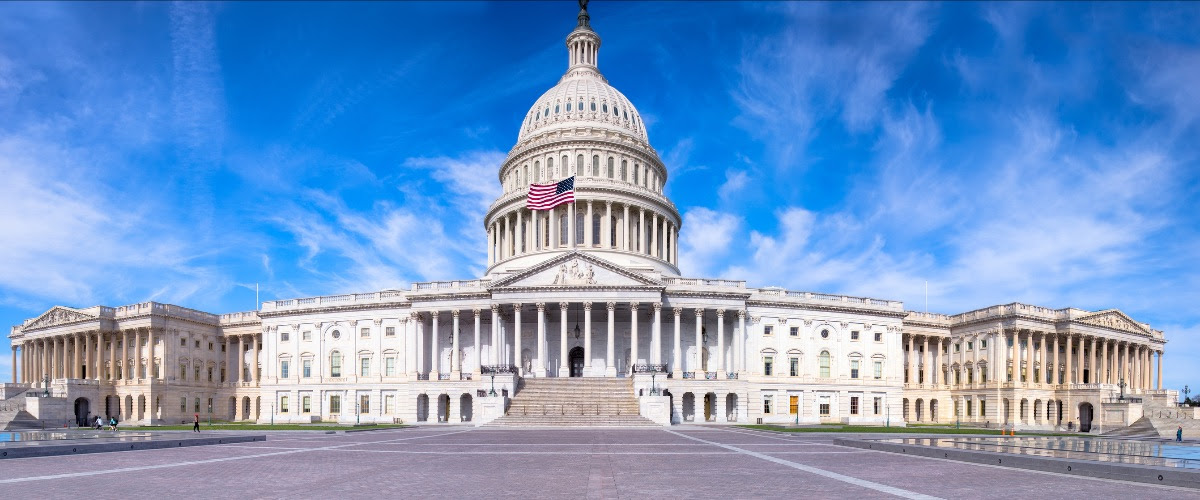
Congress on August recess while House and Senate Energy & Water Appropriations Bills under consideration
Funding for the Atlantic Intracoastal Waterway took a big step forward in the House of Representatives in July. After a one-week delay caused by consideration and passage of the One Big Beautiful Bill (aka the reconciliation bill), the House Appropriations’ Subcommittee on Energy & Water Development and Related Agencies passed their version of the FY26 Energy & Water Appropriations Bill on July 14.
After subcommittee approval, the full House Appropriations Committee held their E&W bill markup hearing on July 17th, and the appropriations bill was passed. The great news for the AIWW is that the House bill included an additional $4.222 million for the waterway in North Carolina, secured by Congressman Greg Murphy through a Community Project Funding request (aka earmark). We were one of only 19 recipients of CPF funding for Operations & Maintenance funding in the country.
The appropriations bill now awaits a vote by the full House of Representatives. Below are links with more project specific-information from the House bill.
The House Energy & Water Appropriations Bill Report with individual project listing is available by clicking here. A full list of Community Project Funding Requests is available by clicking here.
Looking forward
With Congress on August recess, we will not have any hearings or markups until after Labor Day. Upon their return, Congress will need to pass all 12 appropriations bills prior to September 30th or the government will enter a shutdown. It is more likely that Congress will pass a continuing resolution to keep the federal government open, yet that will also be difficult due to the current political realities.
In addition, the Senate has not yet scheduled committee or subcommittee hearings on FY26 Energy & Water Development Appropriations, and Subcommittee Chairman John Kennedy (LA) has expressed deep reservations about moving forward with the current funding levels.
Below is a table outlining our recent success and updating the current state of waterway funding in the House bill. It is possible that we could surpass the $220 million in waterway funding over the past five years with another successful funding cycle in 2026. As always, we will continue to watch how the process moves forward while the members are home for the month, and we will await further action in September.
Adam Telle Confirmed as Assistant Secretary of the Army for Civil Works
On August 2nd, the US Senate confirmed Adam Telle to serve as Assistant Secretary of the Army for Civil Works (ASACW). The Assistant Secretary of the Army for Civil Works is the principal advisor to the Secretary of the Army on all matters related to the Army Corps of Engineers’ Civil Works program. This includes setting policy, providing supervision, and overseeing functions related to the Army’s Civil Works, which encompasses improving and maintaining the nation’s infrastructure and waterways.
Mr. Telle brings more than two decades of public service in the Senate and Administration. In addition to serving in the White House’s Office of Legislative Affairs during the first Trump Administration, Mr. Telle held senior roles under Senator Richard Shelby (AL) and Senator Thad Cochran (MS). Most recently, Mr. Telle served as the Chief of Staff for Senator Bill Hagerty (TN) prior to his nomination. The AIWA congratulates Mr. Telle, and we look forward to working with him to increase federal funding and project support for the Atlantic Intracoastal Waterway.
BoatUS Foundation and NOAA Partnership to Fund the Removal of 300+ Abandoned Derelict Vessels
In a first-of-its-kind effort across six states and two unincorporated territories, dozens of coastal communities will see a significant investment in removing more than 300 abandoned and derelict vessels (ADVs) from their local waters. With four-year project funding from the National Oceanic and Atmospheric Administration (NOAA) Marine Debris Program, administered through the BoatUS Foundation for Boating Safety and Clean Water, the ADV grants will fund removal and education efforts in communities heavily impacted by ADVs and the navigation, safety and pollution hazards they pose.
The projects were selected by a panel of independent salvage experts, state boating advocates, nonprofit research organization and planning agency staff under a program created by the nonprofit BoatUS Foundation with NOAA funding to remove abandoned and damaged boats from our nation’s coasts and the Great Lakes. Read the full press release on the BoatUS website here.
Atlantic Intracoastal Waterway Association Annual Meeting in Savannah, GA
The AIWA is pleased to announce our return to the Savannah Riverfront for the Annual Meeting on November 18-20, 2025 at the Hyatt Regency Savannah. With a number of success stories to share and upcoming projects to discuss, we are building a program to cover a range of topics of interest to all waterway stakeholders, and we will announce our draft agenda in September.
Thank you to our supporting sponsors, and there are opportunities still available. Please click here for the current sponsorship information, and we look forward to seeing you in November.
The AIWA is a national non-profit organization with the mission of securing funding and support for the maintenance of the Atlantic Intracoastal Waterway. We are the only organization dedicated to ensuring the future of the AIWW and proudly represent all stakeholders of the waterway.
Cruisers Net publishes Loose Cannon articles with Captain Swanson’s permission in hopes that mariners with salt water in their veins will subscribe. $7 a month or $56 for the year, and you may cancel at any time.
A Cuban officials searches the stolen panga one last time before letting her leave for Key West. (All images from a Beach Weekend YouTube video.)
The owner of the rental company whose center-console was recently stolen and taken to Cuba has recovered his boat in the most ironic way possible.
Jayme Nabors, a wheeler-dealer from the Florida Panhandle, mounted his own unauthorized trip to Havana with a boatload of buddies and then, with a little help from the U.S. Coast Guard, managed to convince Communist functionaries to free his little lost Panga panga.
A panga is the ubiquitous Mexican workboat design, and Panga is a U.S. manufacturer that builds pangas for the American recreational market, including some center-console models. That includes the 26-footer rented for use in the Florida Keys and then taken to Cuba by Floyd Dean Devasier, 63, of Katy, Texas. The panga’s tracker showed the boat was en route to Havana right up until it went beyond cellphone range.
Using advanced law enforcement technology known as the telephone, U.S. Coast Guard officials notified Cuban Border Guards, with whom they have a longstanding working relationship, that Devasier was heading their way. The Cubans were waiting when he arrived. Shortly thereafter the dude was on a plane heading back to Florida where he was taken into custody by another set of cops and charged.
Meanwhile, Nabors wanted his $70,000 boat back and had no idea how to make that happen, and, frankly, no one to ask, because no one had ever done something like that, or, if they had, they kept it to themselves.
The elephant in the room—because this is GOP-driven policy—is the fact that American citizens cannot take their American boats to Cuba legally. According to Cuba expert William LeoGrande, the “Embargo” against Cuba is “the oldest and most comprehensive U.S. economic sanctions regime against any country in the world.”
President Obama relaxed regulations enough in 2014 to allow American boaters (and cruise ships from American ports) to visit Cuba as long as everyone pretended they were there for some purpose other than tourism. In his first term, Trump turned the clock back on this policy, and President Biden never got around to reversing the reversal of the reversal.
However, there is a process by which a U.S. boater can take a boat to Cuba. The trip must be approved by the Treasury, Commerce and State departments, capped off by receipt of Coast Guard form 3300 “permit to enter Cuban territorial waters.” Oh, and by the way, your applications will all be denied, per the U.S. President.
Nabors conferred. He talked to the Coast Guard and other Homeland Security officials. He talked to the Sheriff’s Office in the Keys. He said he filled out all the forms and submitted all the necessary applications. And, then, Nabors waited patiently for answers from U.S. officialdom.
No, he didn’t.
Nabors gathered together seven business friends, partners, employees and adventurous spirits at his marina in Key West—he owns three Florida marinas—and got ready to thunder on down to Havana. A Cuban emigree from Tampa, whom nobody knew, showed up and managed to insinuate himself into this pack of Southern dudes and a gal.
Another round of waiting, this time for Cuban approval to go back to Florida.
There were nine of them. They brought extra gasoline in case the Panga was on “e.” They brought spare parts and the tools to install them. If the Merc outboard wouldn’t go, they had the gear for a tow.
Nabors confessed to some wishful thinking. “We were under the impression we could come and grab the boat without ever going through Cuban Customs,” he said.
By the time the gang was ready to go, Nabors said he believed U.S. officialdom knew what they were up to, and they never tried to call a halt to it. “Everybody on our side knew exactly what we were doing and when we were going to leave,” he said.
On July 22, the Mighty Nine boarded an Invicible 36 and slipped out of Key West and across the Florida Straits to execute “Operation Beach Weekend,” Beach Weekend being the name of Nabor’s marina business.
Here, it should be mentioned that there is a YouTube video about the trip, and one of two podcasts on the subject has also been released. The podcast is called Nicotine & Jetfuel with Nabors and Brett Divine. Nabors felt that his marinas and his other “lifestyle brands” could get a boost from the exposure.
The YouTube video captures the dual nature of the three-day expedition. Most of the video strings together moments of party behavior and one-liners by the guys. There are aso scenes showing the crew waiting around—in one, waiting on the boat for hours for word from Cuban officials, looking frazzled and, perhaps, needing a toilet.
What the video does not address very well are the mechanics of getting the boat released at the Cuban end. At one point, when he was feeling frustrated, Nabors called his Florida congressman, Jimmy Patronis, who got the Coast Guard involved at the country level. (Pro tip: Nabor’s Verizon mobile phone somehow had service in Havana.)
The U.S. Coast Guard attache at the American Embassy in Havana was vacationing with his family in North Carolina. This officer, who would be a commander or lieutenant commander, flew back to Havana to assist in getting the boat released.
Nabors said he brought as much documentation as he thought necessary to free the panga, but the Cubans had demanded more. Coordinating with support staff back in the states, Nabors got the additional paperwork sent to the embassy itself, where staff ensured it was all properly certified.
Someone in the crew kept filming as a Cuban official examines the boat’s paperwork, but whoever didn’t want to seem to obvious about it.
Two days after their voyage had begun, but not until after more hours of paperwork inspection and searches of both boats, Cuban authorities released the panga to Nabor and his crew. “State sponsor of terrorism” aside, those Communists had showed zero tolerance for ordinary criminal behavior. Nabor seemed impressed that no one had hit him up for a payoff.
Had American officials really given tacit approval to Nabor’s apparently unlawful recovery operation? He thinks so. “We went for it, and, thank the Lord, it worked out,” Nabors said.
LOOSE CANNON covers hard news, technical issues and nautical history. Every so often he tries to be funny. Subscribe for free to support the work. If you’ve been reading for a while—and you like it—consider upgrading to paid.
Cruisers Net publishes Loose Cannon articles with Captain Swanson’s permission in hopes that mariners with salt water in their veins will subscribe. $7 a month or $56 for the year, and you may cancel at any time.
As the editor of Ocean Navigator, which was always one of boating magazines worth reading, Timothy Queeney had a pretty good run. He left the magazine after it was sold in 2021 (and was shut down permanently earlier this year). Loose Cannon recently spoke to Queeney about his reinvention as an author with a first-book about to go on sale.
Loose Cannon: Tim, Bravo on ROPE! In hindsight such an obvious topic. What made you decide to write this book?
Tim Queeney: The inspiration to write ROPE came from… a rope. We always had sailboats when I was growing up and so there was plenty of line around my parents’ house. After my dad died some years ago, my mom suggested I take the milk crates of boat rope home with me to Maine. Over the next few years I used pieces of that rope for various tasks ashore and afloat. One day I grabbed a line from the crate for some purpose but it was knotted in an awkward place. I was about to loosen the knot when I stopped and realized that my dad’s fingers had tied it. It was a physical sign of him still here in the world. I hung that line, knot intact, on the wall and began to think about rope in a way I hadn’t before. After rooting around online I found no one had written a book about rope and its significance in human history. That seemed like a missing piece so I thought I might tell that story.
L.C.: Two things: I’m surprised that some 18th century dude like Benjamin Franklin hadn’t already done his own version. And second, I can’t think of another topic that would be equivalent in its breadth and early origins. A History of Pointy Things, maybe? Is there any other book out there comparable to ROPE, old or new?
Queeney: Yeah, Ben was pretty wide ranging in his interests but he apparently didn’t get around to rope. I would think a history of the wheel or something along those lines.
L.C.: Ha! I just imagined the caveman riding a stone wheel from one of those old Johnny Hart comics. I marveled at the figures for rope on Age of Sail ships—miles of lines—and the many other eye-opening details. Once you had decided to do the book, did you really have to dig or were the details in plain sight just waiting for an author?
The author sails to Bermuda with Paul Antinori.
Queeney: There was plenty of great material easily available. Much of the book that discusses the use of rope on sailing vessels, for example, is well known to anyone with an interest in maritime history. But for readers who aren’t so well versed, I attempted to keep that material as simple and accessible as possible. And I certainly discovered some aspects I was not familiar with. That’s a fun part of research, stumbling across things you hadn’t considered before. I also did some deep digging, which is also a little addictive for research heads like me. One thing leads to another and you realize you’ve gone many layers deep—and maybe a bit off track as well!
I also did 33 interviews with various experts. Those were always illuminating and enjoyable and invariably led me to new aspects of the subject. As you know from your journalism experience, so often in an interview it’s when you’re chatting after the interview is “over” that some of the most interesting items emerge.
L.C.: Could you address the concept of “rope” in the English language? The presence of so much cordage in our daily speech is surely an indicator of its importance as a technology.
Queeney: The English word rope has a derivation that goes far back into ancient languages. It comes from the Middle English rop, from the Old English word rap. And that comes from the Germanic tree as the Proto-West Germanic raip, which, in turn, arises from the Proto-Germanic raipaz or raipa. Pushing even further back into Proto-Indo-European (which is a bit of linguists’ reconstruction as there is no direct record of Proto-Indo-European, but we’ll take their word for it!) we get roypnos. As for rope’s cultural significance, there are plenty of common sayings that point to how central rope has been to daily life: roped me in, rope it off, tied in knots, rope-a-dope, roped and branded, give him/her enough rope, at the end of my rope, throw me a rope, give me some slack, on the ropes, etc.
L.C.: What is the thing you learned that surprised you the most?
Queeney: There were plenty of revelations when it came time to look into the subject in detail. I was surprised that rope-making technology had progressed so far so early. The Cheops solar boat was found in a pit alongside the Great Pyramid in the 1950s. Along with the pieces of the deconstructed boat were coils of three-strand line that looked like it had been manufactured recently, but in fact was 4,500 years old!
L.C.: If they’d found coils of dyneema, I suppose it would be proof that aliens built the pyramids.
Hey, do you remember when we talked before this interview that my mother used to say “Go run up a rope” as a substitute for “Go eff yourself?” Your end-book scenario about hoisting payloads into space using a rigid graphene matrix instead of rockets would actually make running up a rope possible.
What next for the former magazine editor turned author?
Queeney: Next for me is, unsurprisingly, another book. I have a series of nonfiction book ideas lined up and am working on the next one. As a committed fan of ink and paper (and I guess electrons too when it comes to the ebook version), I will keep plugging away in the book world as long as they’ll have me.
Tim Queeney
Coming soon: An excerpt from ROPE tells the tale of the USS Constitution’s slow speed kedging escape from a pursuing British fleet.
LOOSE CANNON covers hard news, technical issues and nautical history. Every so often he tries to be funny. Subscribe for free to support the work. If you’ve been reading for a while—and you like it—consider upgrading to paid.
NEWS from BoatUS Boat Owners Association of The United States 5323 Port Royal Rd, Springfield, VA 22151 BoatUS News Room at https://www.boatus.com/news-room/
FOR IMMEDIATE RELEASE Press Contact: D. Scott Croft, Vice President Public Affairs, 703-461-2864, SCroft@boatus.com
BoatUS Foundation and NOAA Partnership to Fund the Removal of 300+ Abandoned Derelict Vessels in 5 States, 1 Reservation and 2 Territories
Hundreds of navigation and pollution hazards, eyesores to be cleaned up under groundbreaking effort to address ADVs
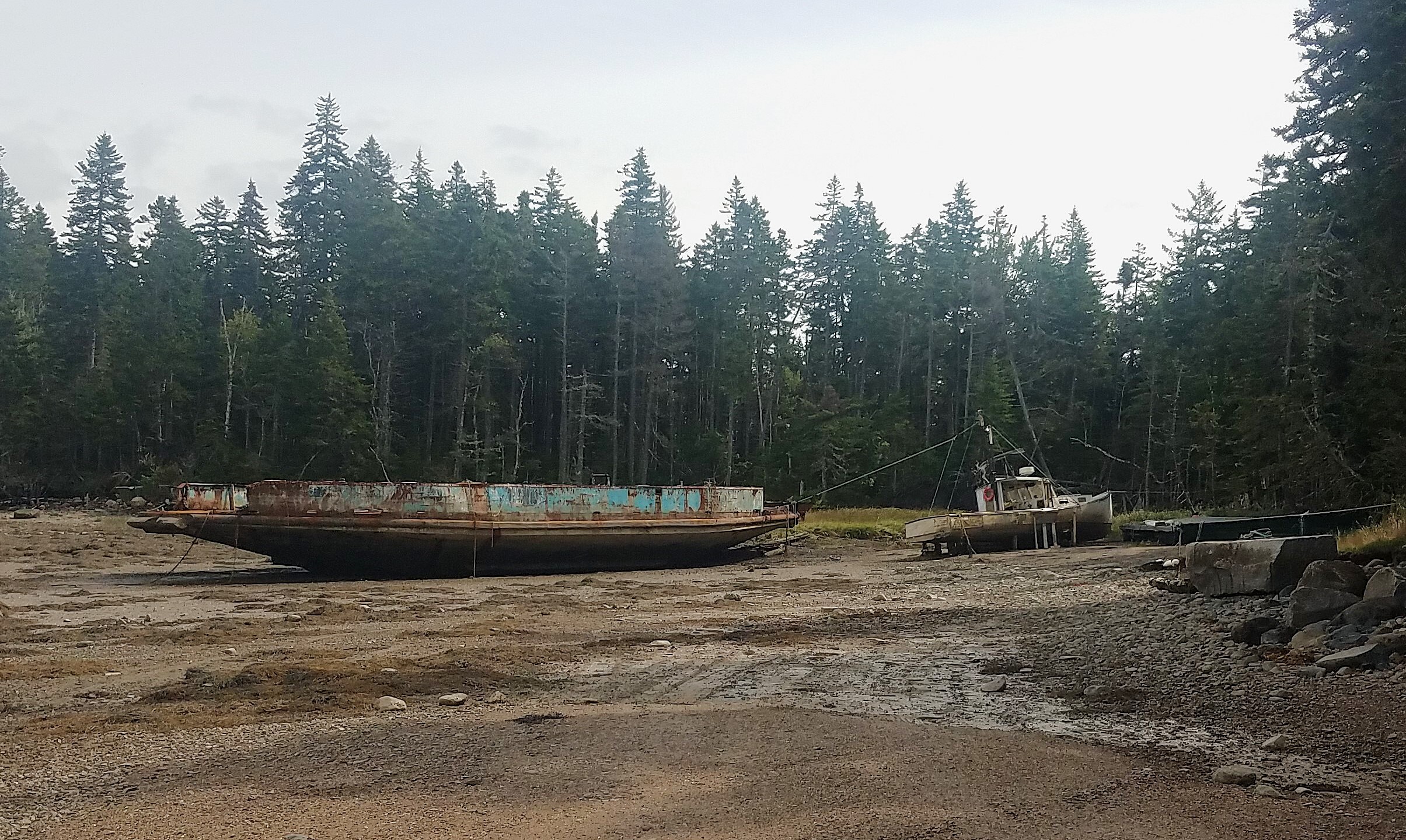
This hidden cove adjacent to Roque Bluffs State Park, Maine, which has been used as a local dumping ground for end-of-life commercial vessels for years, will have ADVs removed as part of a groundbreaking removal program. (credit: John Noll, State of ME) Download hi-res photo
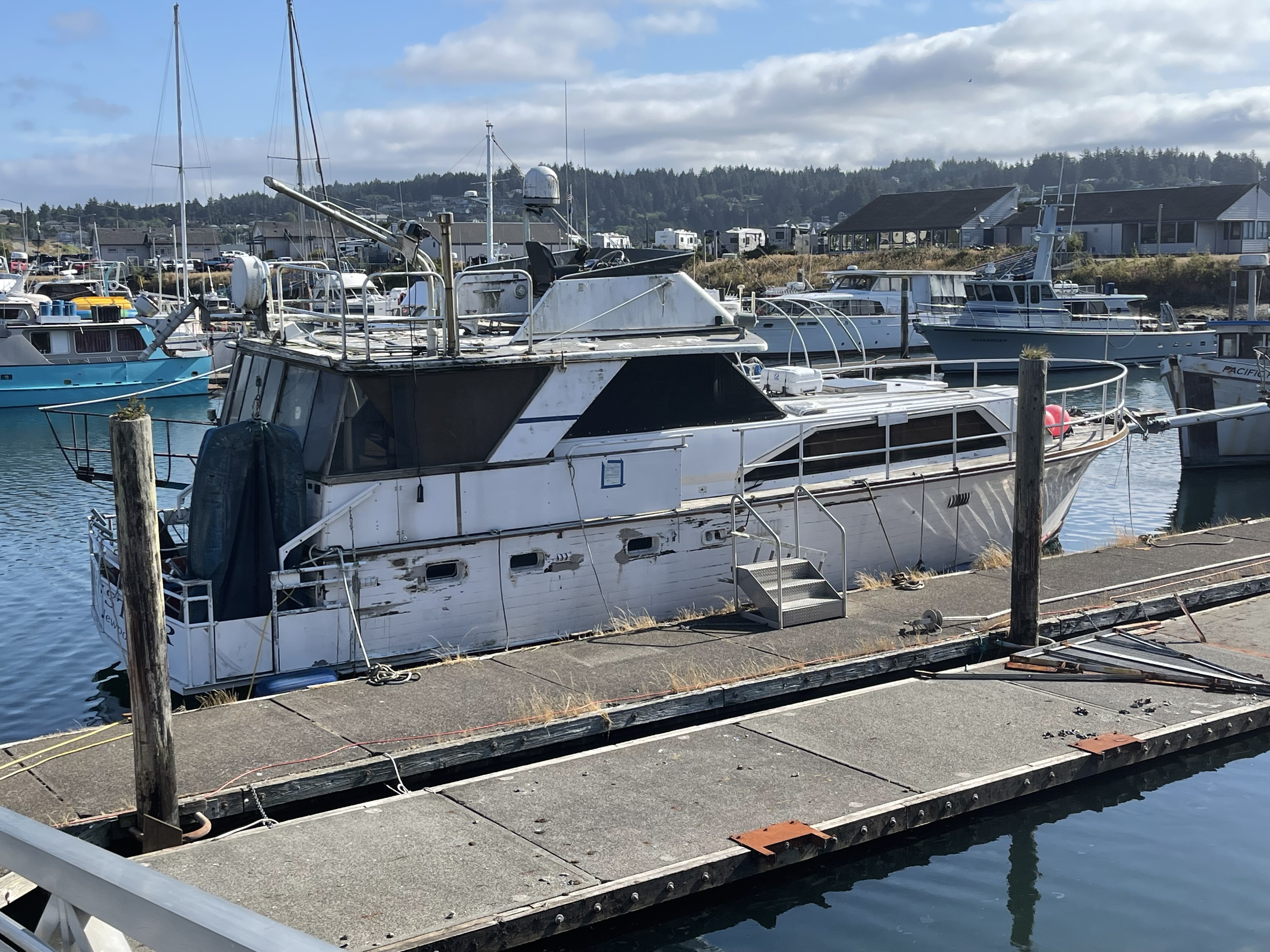
An abandoned derelict vessel at imminent risk of sinking at the Port of Newport, Oregon, will be removed under a groundbreaking removal program. (credit Dorothy Diehl, Oregon Dept. of State Lands) Download hi-res photo
SPRINGFIELD, Va, July 31, 2025 – In a first-of-its-kind effort across six states and two unincorporated territories, dozens of coastal communities will see a significant investment in removing more than 300 abandoned and derelict vessels (ADVs) from their local waters. With four-year project funding from the National Oceanic and Atmospheric Administration (NOAA) Marine Debris Program, administered through the BoatUS Foundation for Boating Safety and Clean Water, the ADV grants will fund removal and education efforts in communities heavily impacted by ADVs and the navigation, safety and pollution hazards they pose.
The projects were selected by a panel of independent salvage experts, state boating advocates, nonprofit research organization and planning agency staff under a program created by the nonprofit BoatUS Foundation with NOAA funding to remove abandoned and damaged boats from our nation’s coasts and the Great Lakes.
Work on the ADV removal projects is expected to mobilize salvage crews across each of the announced grant areas later this year as local environmental reviews are completed. Both recreational and commercial ADVs are targeted for removal.
The awarded states, communities, organizations and programs include:
Makah Indian Tribe of the Makah Indian Reservation, Washington
State of Maine
U.S. Virgin Islands Department of Planning and Natural Resources
North Carolina Coastal Federation
Oregon Department of State Lands
Port Authority of Guam
“This is the first coordinated ADV removal effort across the country and across time zones to address the issue head on,” said BoatUS Foundation Director of Outreach Alanna Keating. “It follows years of good work by NOAA as well as dedicated partners in removal efforts to rid our waters of these hazards. However, there’s never been an effort before at this scale, and we’re proud of making it happen for the boating public and affected communities.”
The ADV removal effort also includes creation of a first-of-its-kind national database to pinpoint locations of ADVs and track their removal. NOAA grant funds also document ADV prevention and removal activities to share with the public and support a national dialogue and education efforts on boating-related debris disposal. This includes the 2nd Annual “Turning the Tide” summit scheduled for December 2026 in New Orleans, which will offer attendees a range of resources, enlightening panels and keynote addresses focusing on ADVs and marine waste streams.
###
Suggested social media post:
BoatUS Foundation and NOAA partnership to fund the removal of 300+ abandoned derelict vessels in 6 states and 2 territories http://bit.ly/4lQUvBm #noaa #cleanwater #cleanwaterways #abandonedderelictvessel #marinedebris #boatusfoundation #ADV
ABOUT:
BoatUS Foundation is leading a nationally competitive grant program for the removal of abandoned and derelict vessels throughout coastal and marine areas of the United States, including the Great Lakes, U.S. territories, and Freely Associated States. This project is supported by the NOAA Marine Debris Program. In an effort to help educate and prevent future ADVs, the Foundation will also create a national ADV database to track the scope of the challenge and measure success, document ADV prevention and removal activities to share with the public, and support a national dialogue and education efforts on boating-related debris disposal. Learn more about the Marine Debris Program by visiting marinedebris.noaa.gov.
Cruisers Net publishes Loose Cannon articles with Captain Swanson’s permission in hopes that mariners with salt water in their veins will subscribe. $7 a month or $56 for the year, and you may cancel at any time.
Amokura is well stuck after having gone aground on Johnson’s Reef on July 17, 2023.
Libbie Oliver wants compensation. The British Virgin Island businesswoman was chartering her Pearson 424 to the Boy Scouts of America until July 2023 when a scout ran Amokura onto a prominent reef. The boat would become a total loss.
According to Oliver’s lawsuit, the boat’s captain was “performing other duties” when her boat crashed onto Johnson’s Reef in the Virgin Islands National Park with a scout at the helm.
Oliver filed suit last week in U.S. Virgin Islands Superior Court. Besides the Boy Scouts, defendants are the boat’s captain, Timothy Frances Sales of Pennsylvania; insurance broker Offshore Risk Management, and “John Does 1-10.”
Sales should not have left the kid at the wheel, or as Oliver’s lawyers wrote:
It was reasonably foreseeable that permitting an inexperienced minor to helm the vessel—particularly near shallow or reef-laden waters—without close supervision posed an undue risk of grounding, injury, or damage to the vessel. Sayles breached his duties by allowing a minor youth participant to helm the vessel near Johnson’s Reef while he was engaged in other tasks and not exercising proper vigilance or navigational control.
Amokura struck Johnson’s Reef, a dangerous patch of coral north of Trunk Bay on the northern side of St. John island, ringed with hazard bouys.
At top is the Aqua Maps depiction of the wreck site. Above is NASA’s depiction of Johnson’s Reef using LIDAR remote sensing technology. The reef is primarily composed of elkhorn coral.
The language of the lawsuit suggests that the boat could have been saved:
The grounding caused serious damage to the hull and rendered the vessel unseaworthy. Plaintiff was insured through a policy procured from Offshore Risk Management, who Boy Scouts of America had recommended plaintiff insure through. However, unbeknownst to plaintiff, the policy that ORM placed excluded coverage for reef damage and wreck removal. As a result of that exclusion, no salvage company was willing to attempt removal of the vessel, and the S/V Amokura remained stranded on the reef until she was ultimately destroyed in a storm in early September 2023.
Through her lawyers, Oliver argued that she had only learned that her policy excluded “two of the most foreseeable risks associated with the charter” after the wreck had happened. If she had known beforehand, she would have “procured alternative coverage that included such risks.”
Oliver, who operates an organic coffee company in Tortola, is asking the judge to make the defedants pay for the loss of the boat, salvage costs and lost income from her charter deal with the Scouts. Amokura was part of the Boy Scouts Sea Base program, carrying six to eight scouts at a time over 11 weeks of charters, each at a weekly rate of approximately $3,500.
Libbie Oliver’s Facebook page features this image with Amokura in the slings.
LOOSE CANNON covers hard news, technical issues and nautical history. Every so often he tries to be funny. Subscribe for free to support the work. If you’ve been reading for a while—and you like it—consider upgrading to paid.
Cruisers Net publishes Loose Cannon articles with Captain Swanson’s permission in hopes that mariners with salt water in their veins will subscribe. $7 a month or $56 for the year, and you may cancel at any time.
Just as this story was about to be released on March 12, 2023, Loose Cannon learned that the owner had recovered the lost yacht VivieRae II. According to information originating from the Nordhavn Dreamers forum, the Nordhavn 96 was underway again. One prop had been fouled by the stray tender towline, as expected. Unexpectedly, the other prop was found wrapped in a fishing net. The yacht’s tender was sighted by the Australian Coast Guard 230 nautical miles away. A boat was underway to recover her too.
A swimmer (circled) approaches a Nordhavn 62. His mission, and that of a diving partner, is to cut a line out of her prop in the middle of the Atlantic Ocean. (Photo by Peter Swanson)
The situation bore similarities to the way VivieRae II was disabled in open ocean north of Australia last week. A big Nordhavn (for her time) lost main propulsion crossing the Atlantic as part of a company-sponsored rally across the Atlantic Ocean.
Both boats had stalled because of lines wrapped around their props.
The VivieRae II story was attracted more than 11,000 readers over the weekend, and some of them (writing on Facebook) blithely suggested that instead of calling the Australian Navy for rescue, a member of the crew should have gone over the side with a sharp knife gripped between his teeth.
The following observations were from the 2003 Nordhavn Atlantic Rally. I was on board the Nordhavn command vessel, Atlantic Escort, during a 1,800-mile leg from Bermuda to the Azores. Escort was sheepherding 17 other vessels across to the Med—mostly Nordhavns.
I was in the pilothouse when the decision was made to put divers in the water, and it was a damn serious moment and just as scary to witness the plan unfold. I can’t compare conditions to those facing the crew of VivieRae II because I wasn’t there, but I would describe the seas in the Atlantic that day as moderately rough.
Jim Leishman of PAE watches as his son and a fellow employee work to clear Autumn Wind’s fouled prop. (Photos by Peter Swanson)
At the time, I estimated the swells were nine-footers, and they were spaced close enough to make us uncomfortable, despite active stabilizers.
When we arrived at the boat with the prop wrap, a Nordhavn 62 named Autumn Wind, she was chugging along at 4.5 knots using her auxiliary or get-home engine. The Azores were about a half day away.
Even so, rally boss Jim Leishman acceeded to a proposition from two of his guys who were pleading to be allowed to swim over and get beneath 77 tons of heaving, pitching, rolling fiberglass and machinery. The stakes were high, not only for the divers involved, but for the company’s reputation; PAE had undertaken the rally as a marketing demonstration.
Leishman is vice-president of PAE, builder of the Nordhavn line. One of the divers was Leishman’s son James. The other was Justin Zumwalt, grandson of the famed admiral who directed U.S. naval operations during the Vietnam War.
Jim Leishman instructed Autumn Wind’s crew to keep the vessel into the seas, using only the bow-thruster to hold her in place. Our guys donned wetsuits and dove off Escort’s swim platform. There was no levity during the operation.
Mission accomplished, James Leishman begins his swim back to Escort.
After the pair was able to ascertain that the culprit was a ½-inch line wrapped several times around the prop, James Leishman timed his move. He waited for a period of relative stability to avoid being whacked on the head by the hull, then dove under the stern with a knife in his hand. He made three cuts before coming back up again.
At this point Jim Leishman asked that Autumn Wind restart her main engine, and, contrary to all conventional wisdom, instructed the crew to give her a blast of reverse. When they shifted into forward gear, the mean vibration that had been caused by the line was gone. Reversing the prop apparently finished the job that James had started with his knife. Autumn Wind had her legs back. We arrived at Horta before the sun had set.
Having witnessed the events of 2003 I can understand why VivieRae’s captain apparently refrained from a similar effort. The tow rope fouling his props was probably more than an inch in diameter, maybe inch-and-a-half. And there were two props fouled, not just one. And there was no escort vessel standing by to assist.
The question I have—and one that was shared by other thoughtful mariners with whom I’ve spoken— was this: Why not spool out some anchor rode, creating an ad-hoc sea anchor, and just hunker down? Sooner or later, seas would subside, and someone could make that dive with a hacksaw.
Stand by. Maybe we’ll get an answer.
James Leishman and Justin Zumwalt swim through 8 to 10 foot seas on the way back to Atlantic Escort after diving under Autumn Wind. (Photo by Peter Swanson)
LOOSE CANNON covers hard news, technical issues and nautical history. Every so often he tries to be funny. Subscribe for free to support the work. If you’ve been reading for a while—and you like it—consider upgrading to paid.
An on-the-water retirement home or vacation home for those who love the rich cultural ports-of-call cruising waters of North Carolina, Albemarle Plantation Marina, a port on the Albemarle Loop and a CRUISERS NET SPONSOR, is located just off the AICW on the northern shores of Albemarle Sound on Yeopim River/Creek.
Albemarle Plantation Spotlights Elizabeth City’s Vibrant Culinary Scene!
For residents of Albemarle Plantation and visitors to our beautiful region, a delightful culinary journey awaits just a short drive away in Elizabeth City, North Carolina. Our latest blog post, “Savor the Flavor: An Exciting Culinary Journey Through Elizabeth City, NC,” dives into the town’s burgeoning dining scene, showcasing everything from charming downtown eateries with waterfront views to establishments serving authentic international cuisine and beloved Southern staples. Discover why Elizabeth City is quickly becoming a go-to destination for food lovers, highlighting its commitment to fresh, local ingredients and the passionate chefs who bring unique flavors to life. Be sure to check out the full story on our website to learn about top spots like Cypress Creek Grill, Paradiso Roma Ristorante, Sagos on the River, and more – perfect for your next delicious outing!
PLAN YOUR DISCOVERY TOUR.
Enjoy a 3-day/2-night stay at the Inner Banks Inn in Edenton’s historic district. Live like a local and sample Albemarle Plantation’s many amenities, natural beauty and incredible water:• Round of Golf for 2 • Boat Ride on the Albemarle Sound (subject to availability) • Golf Cart, Bikes, Kayaks/Canoes • Breakfast Each Day and Lunch or Dinner at one of our onsite restaurants • Full Access to Fitness Facility and Classes and Pool Facilities (subject to availability) • Explore Downtown Edenton by Bike and Discover the Charming Waterfront • Plus, Tour Homes, Neighborhoods, and See Our Latest Home Listings from the $400s!
book your visit now for only $249!
Explore 106 Reddes River Court
3 Bedroom | 3.5 Bath | 3,850 +/- Sq Ft
Don’t miss this opportunity to make this wonderful home yours! This pristine custom-built brick cul-de-sac home is listed for the first time! This stunning home has every comfort–the entrance hallway leads into an open-floor plan living room with stunning exterior views as well as a generous deck. French doors lead to a charming family room and full bath with jetted tub and oversized separate shower. The spacious master bedroom is tucked away with doors leading from both the family room and living room.
This Discovery Package is designed to acquaint you with Albemarle Plantation real estate opportunities. If married, both spouses must attend the property tour. Participants must live outside a 75 mile radius from the property. The $249 is paid to the hotel at time of booking. If customer does not cancel or reschedule within 14 days of arrival, the customer forfeits the $249 as a cancellation fee. Customer is responsible for any incidentals at the hotel. A valid credit card is required to reserve an Albemarle Plantation Discovery Visit. A limited number of packages are available. Subject to availability. Some blackout dates.
The weather during August is a very warm in the Caribbean Sea and Gulf of Mexico and this is also the month when tropical cyclones become active. Gale force winds are rare, however, but can occur in the vicinity of tropical storms and hurricanes.
NOAA August Pilot Chart
Wind
The prevailing winds across the Caribbean during August tend to be from the east, generally light to moderate (7-16 knots) except in the south-central portion of the Caribbean where moderate to fresh (11-21 knot) winds prevail from the east or northeast and where rough seas of 8 feet or higher can be expected about 20-30% of the time. Over the Gulf of Mexico the wind tends to be light (7-11 knots) and more variable in direction.
Tropical Cyclones
Tropical cyclone activity is most frequent over the northeastern Caribbean Sea and waters north of Puerto Rico and Hispaniola as well as the Bahamas and east of Florida where there is a 30-40% risk of at least one storm occurring during the month of August. The risk decreases to around 20% over the Gulf of Mexico and to below 10% over the southwestern Caribbean.
August Tropical Cyclone tracks
Temperature
August is very warm with air temperatures averaging 82F to 85F and sea temperatures range between 83F to 86F.
Fred Pickhardt’s Substack is free today. But if you enjoyed this post, you can tell Fred Pickhardt’s Substack that their writing is valuable by pledging a future subscription. You won’t be charged unless they enable payments.
Cruisers Net publishes Loose Cannon articles with Captain Swanson’s permission in hopes that mariners with salt water in their veins will subscribe. $7 a month or $56 for the year, and you may cancel at any time.
‘Storm Oil’ Isn’t a Thing Anymore, and Not Just Because It’s Against the Law
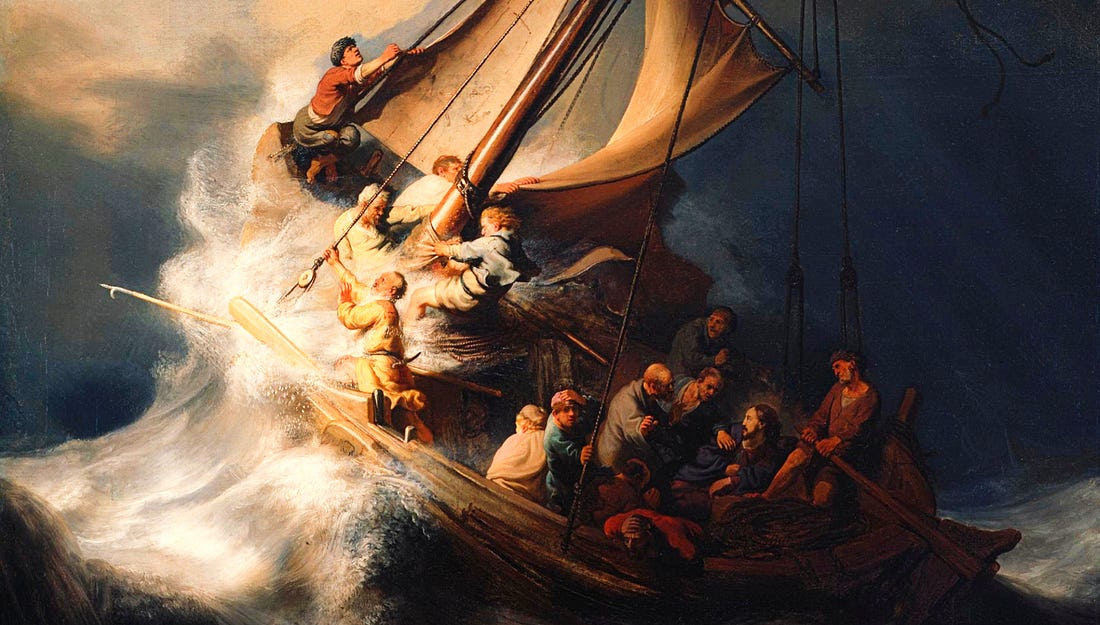
Christ in the Storm on the Sea of Galilee is a 1633 oil-on-canvas painting by the Dutch Golden Age painter Rembrandt. It was based a description of the Gospel of Mark about how Christ calmed the water. A rational explanation is that Jesus—the only calm guy on the boat—had applied the old sailors’ trick of using “storm oil,” which helps prevent waves like this one from breaking. One scholar has suggested oil may also have played a role in preserving the vessel that ran into foul weather while carrying St. Paul to Rome.
While writing a story recently about a harbor plagued by petroleum spills, I was reminded of being a kid and reading about mariners using oil to help survive offshore storms. It was the 1960s, so the magazine might have been in Yachting before it transmogrified into the sop to billionaires it is today.
“Storm oil” could be deployed upwind in a container attached, for example, to a sea anchor, from which it slowly released its contents. Like nutmeg on butternut squash, storm oil was effective even when applied in tiny amounts.
And, as the painting above was meant to suggest, the technique has been used since biblical times (the Sea of Galilee is notoriously subject to sudden violent wind-driven waves). As recreational boating was trending upward in the last century, boating magazines were launched to serve the new market, and one service to readers was to pass along wisdom of professional mariners.
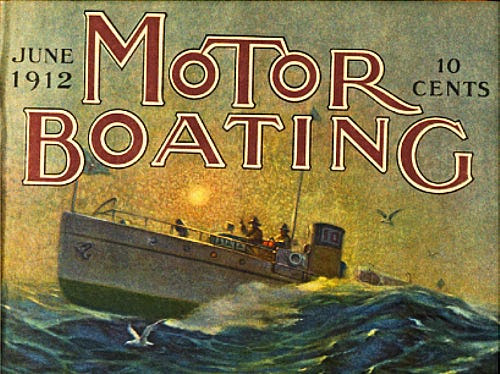
One early magazine account of storm oil appeared in this issue of Motor Boating, known for it’s stunning cover art:
This “heavy weather edition” of the June 1912 magazine credited the Phonecians with first use of storm oil: Sailors from the ancient Middle Eastern nation had observed “that after passing through the wake of whales, oil exuding from their bodies left a perfectly calm spot” (presumably referring to the bodies of the whales, not the sailors).
The following bits of wisdom were contributed to Motor Boating by E.A. Crawford of Newark, N.J.:
As soon as the oil spreads on the surface of the water, it places a film over it, which effectually prevents the waves from coaming and breaking. Of course, it has no effect on the swell.
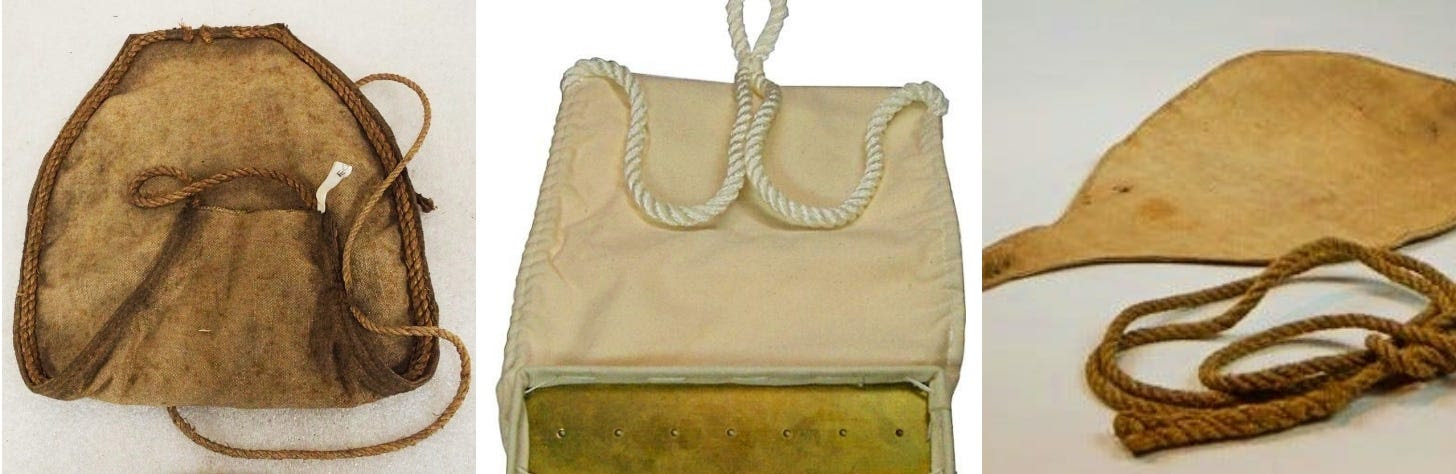
Three bags should be sufficient for a boat as they may be constructed in any manner desired, although the usual shape is cylindrical about six inches in diameter, of two or more thicknesses of heavy canvas. Stuff with oakum and punch full of holes at least a quarter of an inch in diameter to allow the oil to leak out, which is easily done with a marlin spike.
These holes also admit the water, so it can facilitate the oil leakage and make it more uniform. Saturate the oakum with lard oil, if obtainable, as experiments tend to favor it to all others. Still most any oil will serve in an emergency, although mineral oil, having little fatty matter will not produce as good result as vegetable oil, while lard oil being composed entirely of fat is most effective…
If riding to a sea anchor, bend them to the cable, so it will be several fathoms ahead of the boat. Running before the wind, tow one from each bow, using enough line on them so they will always be in the water. At anchor, make one fast to the cable several lengths ahead of the boat, allowing sufficient line so it will float freely.
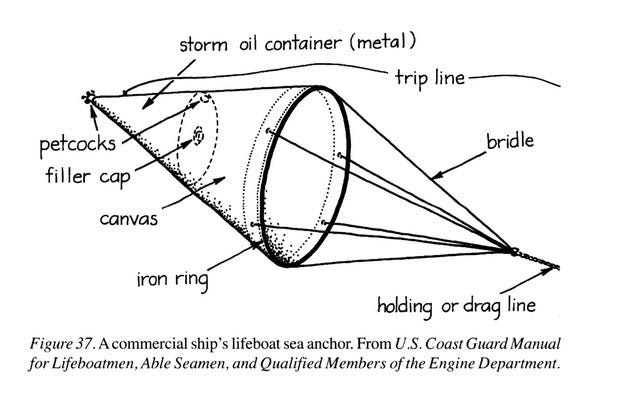
Cone Can in a Sea Anchor
Lifeboats were required to carry them until 1998. Originally, fish oil was the preferred medium, and it was the cheapest. Wave-quelling oil could also be used when launching or recovering ship’s boats or embarking or disembarking a pilot.
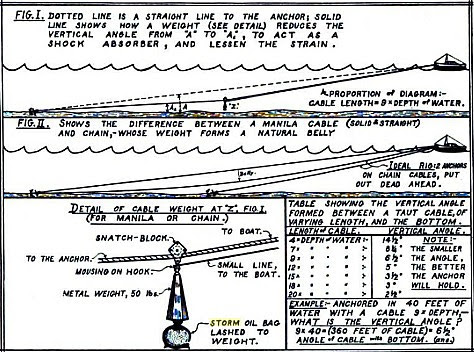
Attached to a Kellet
This illustration is from the June 1943 issue of Motor Boating. “Kellet” in the headline is a somewhat obscure term for a weight attached to an anchor rode.
Storm Oil Bags
The middle one, from an online market site, was labeled “no longer available.” The other two are in museums. (Click on an image to enlarge it.)
The final reference to storm oil that I could find in MotorBoating (the name had become one word) was a 1978 story about a 70-foot sailing vessel lying ahull. She was apparently surfing down massive waves and outrunning the slick until her crew began towing warps to slow the boat down enough to enjoy the effects of the oil.
Benjamin Franklin
There he goes again. Research a topic long enough, and sooner or later Benjamin Franklin is going to pop up. It wasn’t enough that he invented lightning rods, swim fins and bifocals, that he was first to chart the Gulf Stream, but it was Franklin that first confirmed scientifically the efficacy of storm oil.
Sailing to England in the 1860s, Franklin observed that the greasy galley discharge from a nearby ship smoothed its wake. After arriving he conducted experiments at a British lake, which he summarized in a report on “Stilling the waves,” writing:
“Not more than a tea spoonful produced an instant calm, over a space several yards square, which spread amazingly, and extended itself gradually till it reached the lee side, making all that quarter of the pond, perhaps half an acre, as smooth as a looking glass.”
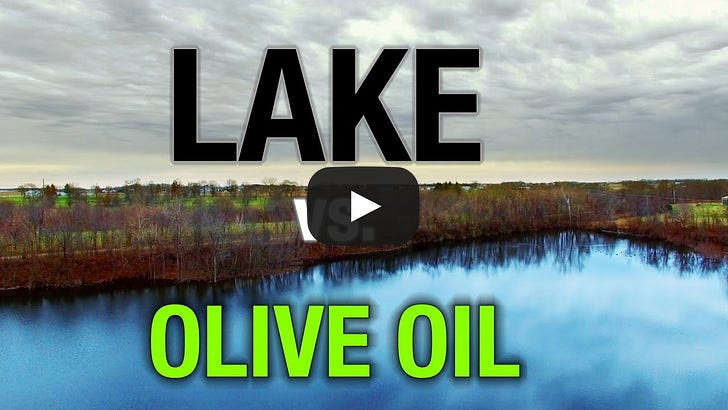
This YouTube guy replicated Franklin’s approach and gives a pretty good explanation of the science involved. He even used olive oil, as likely had the early Phonecian practicioners.
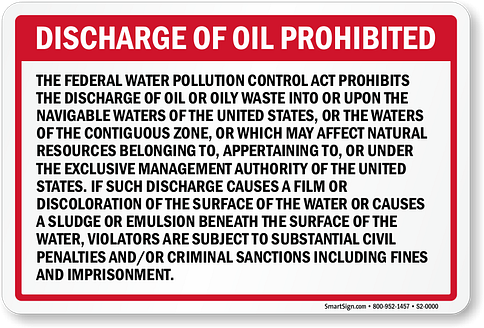
The Federal Water Pollution Control Act was enacted in 1948, but rewritten in 1972 and amended twice since. For boaters, one result was the placard below, which we are all required to display on vessels 26 feet and over with an enclosed engine compartment.
But what if a vessel is outside U.S. waters entirely? Todd Lochner, an admiralty lawyer in Annapolis, was asked whether restrictions on releasing oil follow us onto international waters, which is where we are most likely to have to ride out a storm.
The short version is that there are laws which are applicable to both U.S. territorial waters, and generally speaking, there are laws which will follow the flag state of the vessel. Let’s not forget that there are certain treaties like UNCLOS¹ which will apply, particularly if the flag state is a signatory as well. As usual, clear as mud with a lawyer response that I need more information and factual scenario, etc. etc.
As late as 1991, “Chapman Piloting & Seamanship & Small Boat Handling” was still informing readers of the benefits of oil in the storm but with a disclaimer about it’s dubious legality. In 1999, the first edition of “Surviving the Storm: Coastal & Offshore Tactics” by Steve and Linda Dashew only mentions storm oil a few times in passing.
No matter, I think. If given a choice between adding a couple quarts of Rotella T to the Atlantic and death by drowning, most of us would probably choose the former. The law and politically correctness may be why none of our written authorities are touting oil as a solution nowadays, but the real reason for its disuse is this: We now have tools to avoid being caught in storms, which did not exist before the 1990s, let alone 1912.
Better Forecasts
Ocean-crossers like the Dashews are a rare breed. Many of us haven’t done anything riskier than an overnighter. Most offshore passages are limited in duration to four, maybe five or six days. Think “I-65,” the route from New England to the Caribbean via Bermuda.
Weather forecasting for a four-day window is actually pretty damn accurate nowdays, and, since the new Millenium, the electronic means for receiving such forecasts have proliferated, the latest and greatest being Starlink. We’re not getting surprised like we used to.
Think of it this way: The conditions for using storm oil and a sea anchor are pretty much the same, as suggested by one of the illustrations above. Yet the sea anchor has become like a vestigial tail. Many of us still carry one, but most of us who do, have never used it.
If you’ve deployed a sea anchor in actual storm conditions, please share the story with us below. Do you think oil would have helped?
LOOSE CANNON covers hard news, technical issues and nautical history. Every so often he tries to be funny. Subscribe for free to support the work. If you’ve been reading for a while—and you like it—consider upgrading to paid.
Cruisers Net publishes Loose Cannon articles with Captain Swanson’s permission in hopes that mariners with salt water in their veins will subscribe. $7 a month or $56 for the year, and you may cancel at any time.
The topic is timely as states seek to enact time limits on anchoring. The author is a retired naval architect and regular Loose Cannon contributor. More importantly, in the context of this opinion piece, he once served as harbormaster at Cape Elizabeth, Maine, which is to say that he has real-world experience managing anchorages. Loose Cannon endorses Long’s point of view, informed by having myself once served on a small-town Massachusetts harbor commission.
The right of unimpeded vessel passage through navigable waters has been deeply embedded in common law since before the nation’s founding. The U.S. Supreme Court has confirmed the fairly obvious point that anchoring is an essential aspect of vessel operation and therefore subject to the same legal principles, and that it should only be restricted in the case of overriding public interest.
An example for navigation would be restriction of entering military practice zones; for anchoring, not obstructing navigation channels or disturbing especially valuable bottom habitat such as coral reefs. The bar for prohibiting or restricting anchoring is therefore a high one and rests on the foundation of freedom of navigation.
However, the many controversies, lawsuits, and legislative actions I have followed over the years mostly seem to overlook a vital point: Navigation is performed by people aboard vessels. The age of the self-navigating vessel may be coming, as it is on roads, and regulators and legislators will need to address it.
But for now we are considering the issue in the present world and based on the common law that brought us to this point in time. A vessel anchored with people aboard is navigating; an unoccupied vessel at anchor is not. The unoccupied anchored vessel is therefor due a lower level of freedom from restriction and regulation.
The common law of anchoring developed in an age when it would have been exceedingly rare for a vessel to be left at anchor without a crew aboard. An anchor watch would be kept all night by rotating crew members to be sure the anchor did not begin to drag with weather or current changes. This practice is still maintained by many commercial vessels.
For the small crews on recreational vessels, the anchor watch has now been largely supplanted by GPS based anchor alarms but there is still the presence of a crew aboard that can quickly respond to an anchor failure or emergency. This is a significant issue in appropriate regulation of the use of anchors.
Visit Loose Cannon on Facebook for links to the latest news stories about boats, boating and waterways.
If a state chose to establish a prohibition against a vessel being left unoccupied while at anchor, I believe it could ultimately prevail in the courts based on the navigation principle. I doubt that the state would want to do this however. There would be huge push back from the boating community and it would be injurious to shoreside businesses in those places where people can anchor and go ashore to spend money.
In those situations however, the occupants of the vessel are near by and in a position to monitor the weather and return promptly to the vessel if necessary. Anchoring an unoccupied vessel and then leaving town overnight or for several days is a very different situation. I also believe that people who wish to live aboard long term in a harbor with jobs ashore can not be considered to be attending their vessel unless they have have a job that keeps them close to their vessel and an arrangement with their employer that lets them leave immediately and at will.
Even in that case, there will be the necessity for them occasionally to leave town. If they do not want to move their vessel to a dock or marina on those occasions, their vessel should be on a stout and permitted mooring. Another distinction that has usually failed to be made in the various anchoring controversies is that between anchors and mooring.
The phrase “anchored or moored” constantly appears but there are very important and relevant distinctions when regulations are contemplated. Vessel anchors are gear sized and arranged to be deployed, retrieved, and carried by a vessel. As such, compromises must be made in size, weight, and configuration. Moorings, on the other hand, are generally installed by vessels specifically intended for the purpose. They can thus be larger than a vessel on them would be able to retrieve.
Their anchor design does not need to be compromised by storage underway and can be less susceptible to breaking out and dragging with current and wind shifts. All of these anchoring questions are ultimately about individual use of a public resource which is the navigable waters.
Another important distinction between vessel anchors and mooring is that a vessel takes its gear with it and frees up that portion of the public resource when it leaves. A private mooring, as a (semi)permanent installation, continues restrict a portion of the resource even when the vessel is absent. Moorings should therefore be regulated and subject to approval with appropriate permits and fees.
A vessel which puts out its anchor and is then left for a long period of time is not really anchored nor is it navigating. By virtue of its occupying a portion of a public resource, it is actually a vessel on mooring but a mooring consisting of inadequate and substandard gear for the situation.
Any appropriate approval and permit issuing for moorings should consider the factors of vessel size, nature of the bottom, anchor type and weight, etc. to ensure that the vessel will remain in place through weather conditions that can be reasonably expected.
Any public process of discussing anchoring and mooring will generate many responses along the lines of, “A good anchor is better than an unknown mooring.” “Moorings can break too.” “I trust my gear more than something put down by someone I don’t know.” I agree. I would rather ride out a storm on my own anchor in a carefully selected spot than on a mooring.
An anchor usually begins to drag slowly and gives enough warning that engines can be started and action taken. When a mooring fails, the boat will immediately be moving through the harbor at whatever speed the wind and current can generate. Contact with another vessel is highly likely.
However, I have tens of thousands of miles of experience and very good ground tackle. Public policy must be based on a much lower common denominator. Note also that I said, “Ride out.” I would be aboard to deal with emergencies and thus would be navigating with the greater regulatory protection of that status.
If I could not be aboard the vessel for a storm, I would want the vessel on a mooring that I believed was up to the job. Strictly speaking, I consider it poor seamanship to leave a vessel anchored unattended through a tide cycle since anchor drags usually occur after the reset when the direction of pull changes.
Few, even the anchoring activists, would consider it appropriate for someone to drive an RV into someplace like a national forest and just leave it with the license plates removed and expect to come back weeks or months later to use it. Why should it be different on the water?
LOOSE CANNON covers hard news, technical issues and nautical history. Every so often he tries to be funny. Subscribe for free to support the work. If you’ve been reading for a while—and you like it—consider upgrading to paid.
Retired designer of boats and ships, former. Explorer and researcher of the Titanic. Private pilot. Internationally recognized authority on the stability of large sailing ships. Avid cruiser with over 40,000 miles in sail and power.
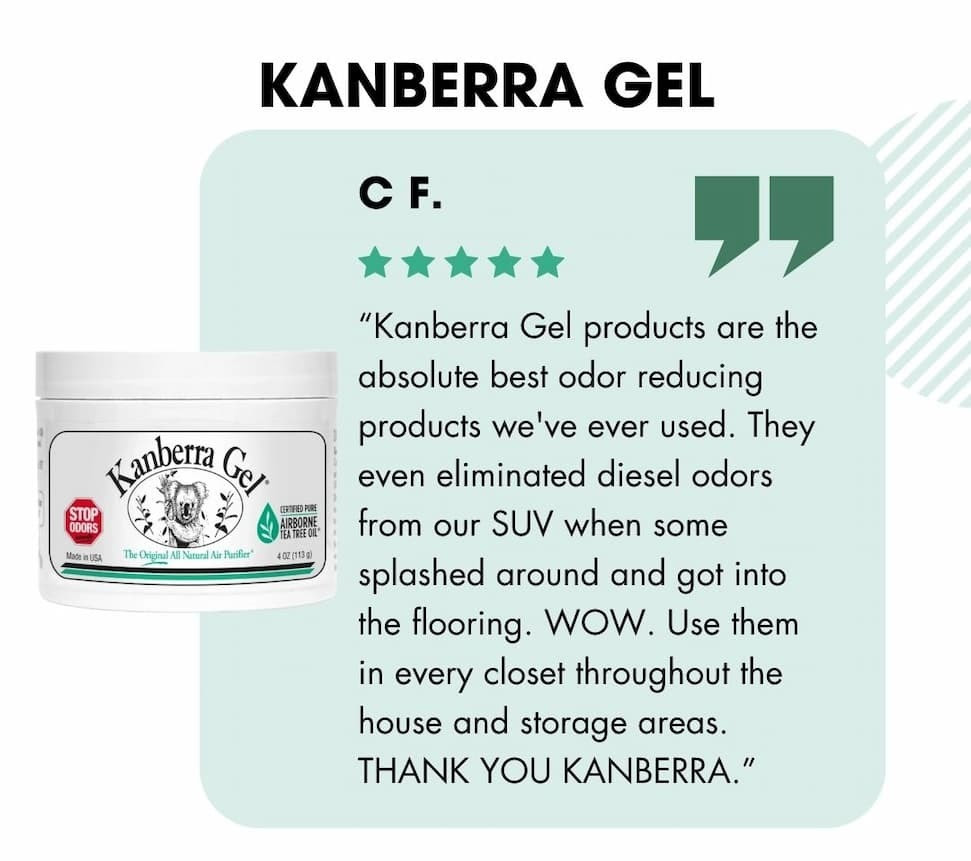
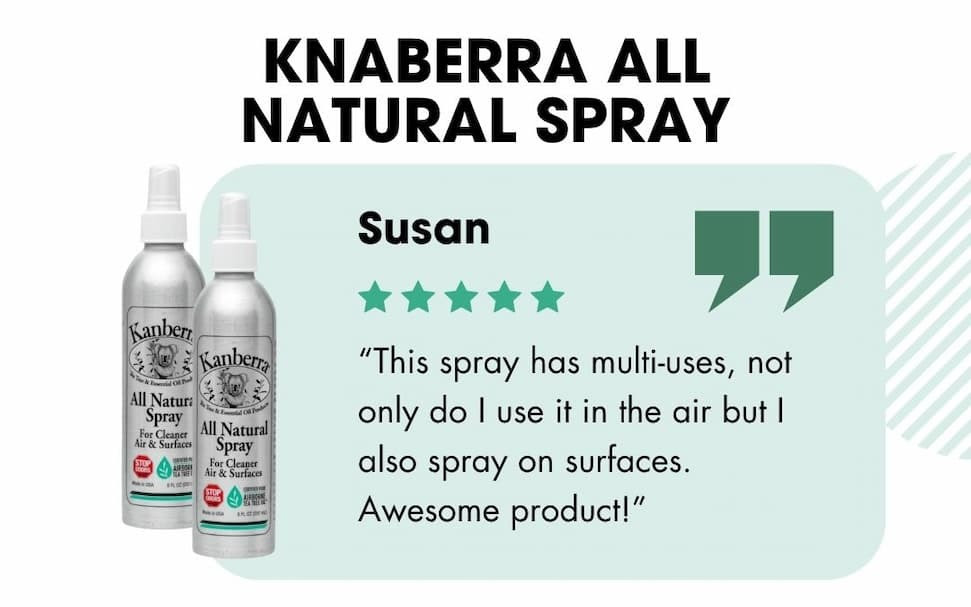
We could tell you how powerful and effective Kanberra is… But it’s better when you do. Here’s what real customers are saying about the all-natural solution that keeps their homes fresh, clean, and odor-free.
Cruisers Net publishes Loose Cannon articles with Captain Swanson’s permission in hopes that mariners with salt water in their veins will subscribe. $7 a month or $56 for the year, and you may cancel at any time.
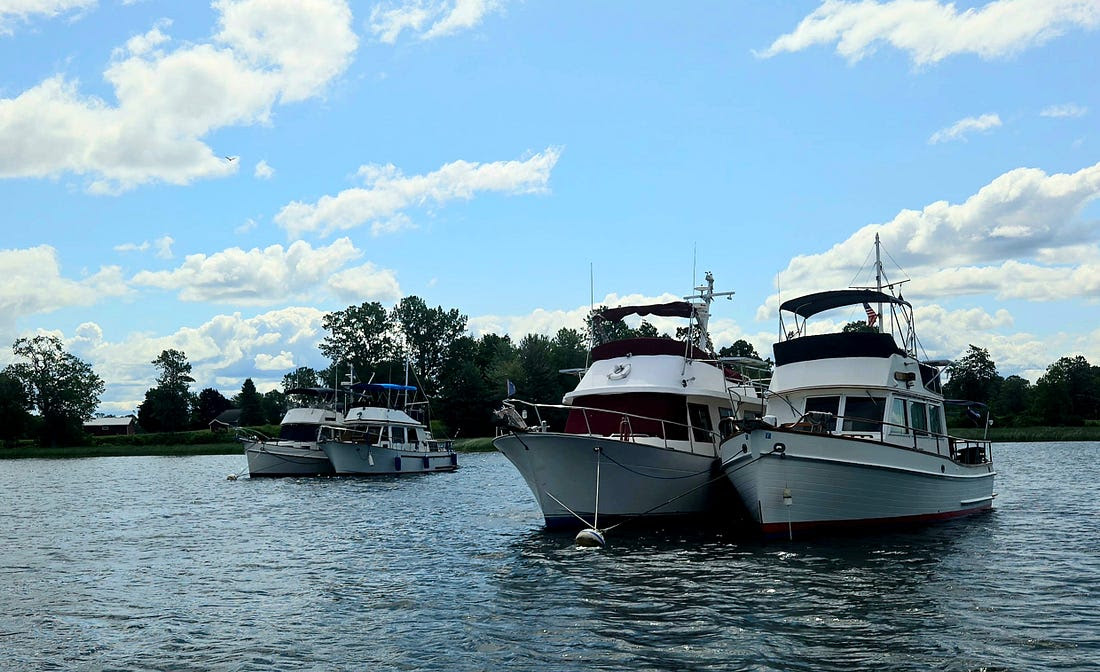
A foursome of American trawlers moor in cozy anchorage on Lake Champlain last week.
A reconnaissance to Lake Champlain appears to confirm that the Canadian reluctance to spend tourist dollars in the U.S. this year applies to its cruising community as well.
Loose Cannon’s home base in Green Cove Springs on the St. Johns River is a boat storage hub for Canadian cruisers, to the extent that a local boatyard has named one of its storage lots “Canada.”
The question is: Will the Canadian sense of having been disrespected continue into winter when snowbird cruisers traditionally flock to American’s Southern states, mainly Florida? The waterfront city of Plattsburgh, N.Y.—just an hour-and-15-minute drive from Montreal—may be a bellwether for Florida next fall.
A couple dozen marinas line both sides of the big lake from Burlington Vt. to the Canadian border. Champlain freezes in winter so docks and boats are typically hauled out, and slipholders are also hauled out and stored on the grounds, too.
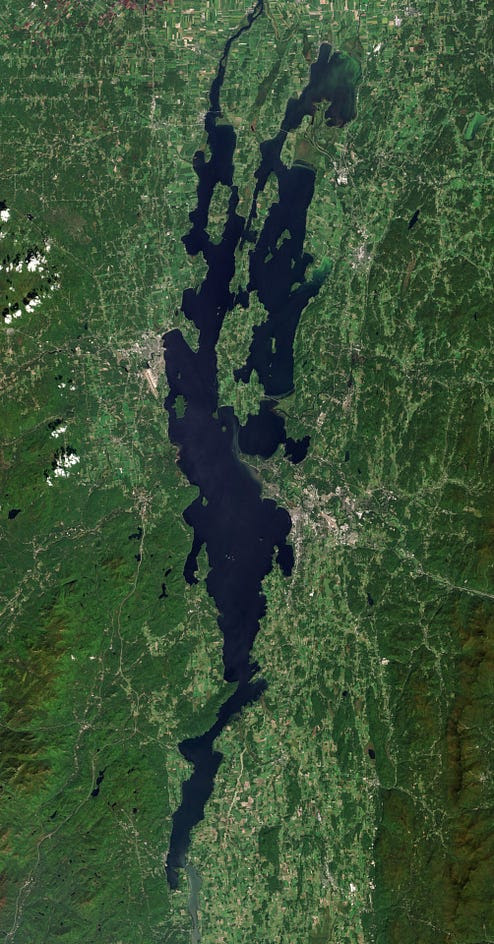
For foreign readers a tad unfamiliar with U.S. geography, Champlain is a lake that is 107 miles long, 14 miles wide and averages 64 feet deep. The east side laps up against the state of Vermont and the west side against the state of New York, with a nib poking up into Canada’s Quebec province.
In the windshadow of the Adirondak Mountains to the west, Lake Champlain benefits from a microclimate. The valley is often referred to as the “banana belt” of Vermont with a longer growing season and milder temperatures compared other parts of Vermont, and, for that matter, New York State.
According to Vermont tourism officials, five percent of out-of-state visitors and 30 percent in northern parts are Canadian. Similar numbers likely apply to the New York side, including the city of Plattsburg, where we stayed. The Canadian tourism season begins in earnest on July 1, which is Canada Day—kinda sorta their Fourth of July.
Businesses in the Vermont city of Burlington have been reporting that Canadian visitors were down anywhere between 15 to 50 percent. TheBoston Globe newspaper quoted Canadian officials as saying that roadtrips across the border to the U.S. were down by 32 percent compared to 2024, the third straight month of declines.
TV reporters caught Vermonter Tracy Stopford as she was loading her boat recently at the Ferry Dock Marina in Burlington ahead of Fourth of July celebrations. She said Canadians have been noticeably absent.
“We have been discussing amongst ourselves: I think that there’s 50 percent less Canadians docked out right now,” Stopford told WCAX television.
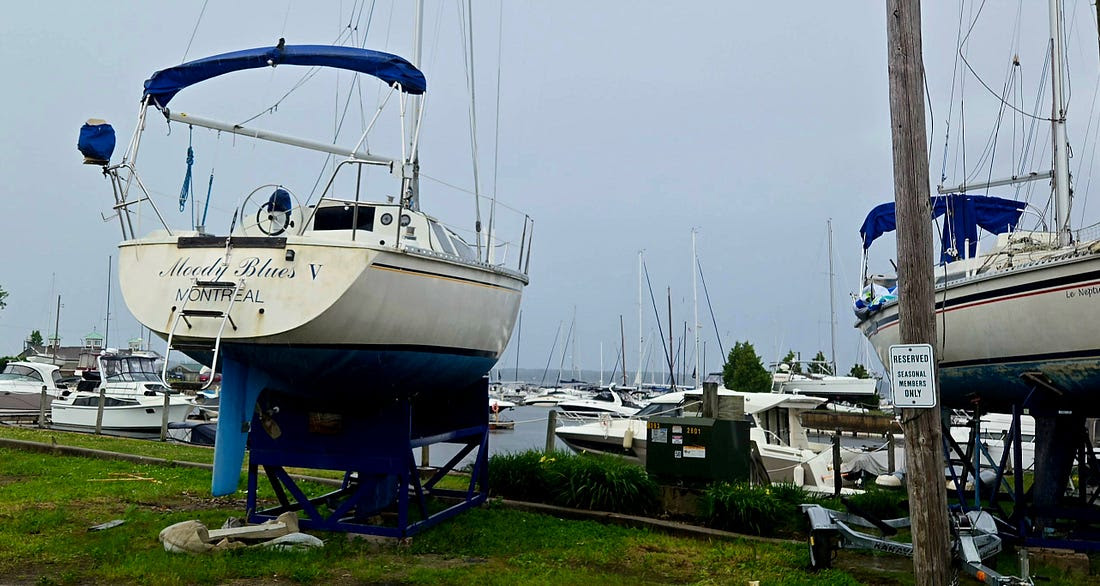
Visiting Plattsburgh marinas after the Canada Day weekend—there are five—Loose Cannon noted that many vessels with Montreal hailing ports were still resting on jackstands. To be sure, quite a few had been launched and lay in slips as well.
Last week, many Canadian boats at Plattsburgh marinas had yet to be launched.
Anyone paying attention is aware that the American government’s tariff initiative has generated quite a bit of anti-Canadian rhetoric, but as the Globe noted, that may not be the only factor:
Since President Trump took office this year with threats to make Canada “the 51st state”—and imposed tough tariffs and new border security measures—Canadian tourism to the US has plummeted…
The reasons go beyond tariffs. The US government has spooked Canadian tourists by requiring them to register if they’re in the country for 30 or more days—and by searching electronic devices at the border. The Canadian dollar remains weak compared to the U.S. dollar, making southerly shopping trips expensive.
However, as the U.S. dollar weakens as the result of uncertainty also created by the tariff initiative, the Canadian dollar has gained value by default. The Loonie, as it is called, has gained three percent in value against the dollar since President Trump entered office, and it is forecast to continue an upward climb.
That suggests that decisions by individual Canadian cruisers about whether to come back to Florida may be largely influenced by the state of U.S.-Canada relations going forward and to what degree Canadian cruisers will hold a grudge. Recent increases in cruising fees in the Bahamas may have made the entire region less attractive.
For sure, a lot of this reporting is anectdotal. If you are among our Canadian readership, please share your thoughts in the comment section below. You don’t have to be a subscriber.
LOOSE CANNON covers hard news, technical issues and nautical history. Every so often he tries to be funny. Subscribe for free to support the work. If you’ve been reading for a while—and you like it—consider upgrading to paid.


 Designed to blend seamlessly into its surroundings, it’s the understated elegance you’ve been searching for.















































Be the first to comment!