Sadly, as Steve Ramsay bewails, what seemed unthinkable ten years ago is now a reality, not only in Florida, but along much of the east coast: free, public anchorages are becoming pay-for-use municipal mooring fields. (Enter “mooring” in the Search window above for a perspective on the battle that was waged against mooring fields in Florida several years back.) While welcomed by some who see the moorings as an alternative to ever rising dockage fees, those of us who boat on a budget and find the moorings restrictive, along with the prohibitive cost of boating in general, are in agreement with Steve, to the point that we can no longer afford to spend much, if any, time cruising. Steve is replying to A Disturbing Message about Anchoring.
Like so much of our culture today, it is a case of the “HAVEs” versus the “HAVE NOTs.” We hear you Steve!
I moved here from New England and as a boater since age 2, I am very disappointed with the availability of moorings here (Tampa area). Boating is such a healthy outdoor activity for the whole family. Go to New England, you will see boats on moorings as far as the eye can see, and they only have a 4 month season. I had planned on buying a 24 ft. sloop, but I am afraid I will have to abandon the idea altogether. Personally, at $400 per month for a mooring, I am forced to leave my favorite past time to a high end class of people who will continue to enjoy sailing as much as I did. I have been priced out. It seems like boating here is discouraged rather that encouraged and fully advocated for.
Share:
Comments from Cruisers (2)
edd Jennings- July 31, 2019 - 9:37 am
It seams to me that the big marinas are really controlling the cost of docking more so than ever, in St. Petersburg the safe harbor group will get control of the city docks soon, that means they have a monopoly controlling all the docks and moorings in St. Petersburg. As for anchoring I don’t have any problems with this except that Most anchorage’s have bad boat that are in kept and in danger of abandonment also there is a problem with pumping out this is a federal regulation that is always over looked Anchorage for transit moorings and dingy docks is a good idea for everyone at a minimum price if not totally free.
You are absolutely correct,Steve. I traveled in a trawler from North Carolina to Louisiana for many years and enjoyed the many towns and anchorages along the way. Not nearly as many anchorages as there used to be. And many more restrictions on the ones that are left. Florida, especially , seems to discourage boating. Especially transient boating. I got tired of the hassle and high cost of marinas, moorings, and dockage and got out of boating. It’s not affordable for the average pocketbook anymore. It’s just one more thing that belongs to the people with a lot of money. The middle class will soon be no more. My opinion, Jerry
DERELICT VESSEL REMOVAL GRANT 2018-2019 OPPORTUNITY ANNOUNCEMENT
The Florida Fish and Wildlife Conservation Commission (FWC) is announcing the first opportunity to apply for Derelict Vessel Removal Grants for the 2018/2019 budget year. The application period for the Bulk Derelict Vessel Removal Grant Program will begin on September 3, 2018, at 8:00 AM (EST), and end on October 17, 2018, at 5:00 PM (EST). Applications received after October 17, 2018, will not be eligible for consideration in round one. All removal applications must be complete and authorized for removal in the Statewide Derelict Vessel Database as well as demonstrate proof that due process was provided for each vessel’s owner. At a minimum, this would include an opportunity for the vessel owner to challenge the derelict vessel determination, either in criminal court or in an administrative hearing. Vessel cases not demonstrating that these opportunities have been offered to the owners of the vessels will not be considered for state funding assistance. A Letter of Authorization to remove and dispose of the vessel, issued by a law enforcement agency must be included in the application. Should funding be available for a second or subsequent round of applications, new announcements will be made. The grant guidelines and application form may be downloaded at: http://www.MyFWC.com/DVGrant.
You may also receive the guidelines and application by contacting Phil Horning at (850) 617-9540 or email DVGrant@MyFWC.com.
Applications that meet the requirements for the Rapid Removal Grant Program may be submitted at any time after the opportunity announcement start date, but no later than November 23,2019, at 5:00pm (EST) (based on available funding). Rapid removal cases must meet requirements of published guidelines as well as due process requirements. Total funding allocated for derelict vessel removal for fiscal year 2018-2019 was $1,000,000. Applications may be mailed to the Florida Fish and Wildlife Conservation Commission, Boating and Waterways Section, Derelict Vessel Grant Program Administrator, at 620 S. Meridian Street – Room 235, Tallahassee, Florida 32399-1600 or emailed to DVGrant@MyFWC.com.
For further information, please contact:
Phil Horning, Derelict Vessel Program Administrator, Florida Fish and Wildlife Conservation Commission, Division of Law Enforcement, Boating and Waterways Section, (850) 617-9540 or email Phil.Horning@MyFWC.com
With the release of the 2017 Boating Accident Statistical Report, the Florida Fish and Wildlife Conservation Commission (FWC) encourages boaters to focus on simple, effective steps that make boating safer.
We think you will appreciate the new comments from Dan, Glenn and Bill on Jim Healy’s article on wake originally posted by Claiborne in 2011.
Jim Healy
The very informative message below is copied from the Trawlers and Trawlering Mail List. This free list is an excellent adjunct to Cruisers’ Net, and we highly recommend it. Thanks to Captain Jim Healy for giving one of the best and most thorough descriptions of restrictive speed zones I have ever seen!
Florida does by far the best job of identifying speed zones as any other US State. By far. (Canada is best of all, but I digress.) Florida Law defines three categories of marine speed limits: 1) “Idle Speed, No Wake,” 2) “Slow Speed, Minimum Wake” and 3) “Normal, Safe Operation.” There are several variations of “Slow Speed, Minimum Wake:” everything from 25MPH nights, 30MPH days, to date restrictions, etc. Many, many “Slow Speed, Minimum Wake” signs have small print that says “channel exempted” or “channel included.” Or, within 300 feet of the west (or) east shore.” Or, “within 300 feet of the bridge.” Or, effective dates. Take a pair of binoculars and make sure you read the small print. That small print can save you travel hours and personal anxiety. In almost all Manatee areas (narrow channels with shallow waters where the animals are likely to be in the deeper channel areas), you will see long stretches of “Slow Speed, Minimum Wake.” One that’s about 6 miles long runs from below New Smyrna Beach to Mosquite Lagoon. The good news is, there are actually relatively few “Idle Speed, No Wake” zones, and Florida in general does not abuse them. Remember, the best way to get compliance is when people generally agree that the rules are “right.” If people comply because it’s the right thing to do, enforcement is not required. So, “Idle Speed, No Wake” zones in Florida are generally short, and virtually always surround narrow bridges and boat ramp launch areas. Florida State Law defines “Slow Speed, Minimum Wake” as “fully settled in the water,” not making a wake that would cause harm to other nearby boaters, and minimum wake. For trawlers that travel at hull speeds of 7.5 kts, “Slow Speed, Minimum Wake” is essentially not much different from your normal speed. All I do is back off 200-250 rpm or so to make sure my wake doesn’t break at the crests. That’s where I’m fully compliant with the law. NOTE: This set of distinctions is NOT well understood, even by other boaters, so from time to time, people will yell at you. I always wave back in friendship. One such area is the bascule bridge tender at the Haulover Canal. Another is the area of Peck Lake, just above Hobe Sound (Jupiter Island). And yet another is at the Royal Palm bridge in Palm Beach County. They’ll yell at you that you’re in a “No Wake” zone. Not true; the zones are clearly marked “Slow Speed, Minimum Wake.” When you remind them of that (high power, channel 13 or 16, so the whole world hears), they go quiet, or mumble and mutter. But, these areas are heavily patrolled, especially on weekends, and none of the police agencies (FWC, sheriff, metro) will quibble with you. In fact, they often operate (non emergency mode) with wakes larger than your own. We’ve never been stopped, and we always wave and get friendly waves back. Good judgement is important, too, since some min wake areas are more sensitive than others. The pearl is, Florida “Slow Speed” zones are designed to protect Manatees by controlling heavy, powerful sportfish and sea-ray types that are fast, selfish and have exposed wheels; Manatee can easily avoid trawlers and slow cruisers. And of course, sail boats. So except for the immediate area of South Florida between Ft. Lauderdale and Miami, you will rarely be inconvenienced by “No Wake” zones. A good guide in South Florida is to watch what the local 12 – 18 foot day boaters are doing. They are a useful indicator in unfamiliar territory. If they’re ripping along, you’re OK. If they’re dawdling along, check the signage. Jim Peg and Jim Healy aboard Sanctuary Currently at Franklin Lock, Alva, FL, southbound
What you write makes sense, but unfortunately law enforcement does not always use common sense. I have been stopped in my sailboat in a `Slow Speed, Minimum Wake’ zone while creating at most a 6-inch wave which I produce at my usual cruising speed. The most infuriating thing was that moments before I was pulled over I was seriously waked by a whole string of powerboats going full tilt through the same area. Luckily, when I angrily confronted the police officer with this information he let me go. His take was that even on a sailboat throwing almost no wake we must slow down significantly in these zones. John Kettlewell
I have to disagree with Jim. Here on the West Coast you better be going slower than 7.5 kts in a min wake zone. I have personally asked three FWC law enforcement officers how they define min wake and none gave me an answer other than go very slow. They did not have any definition and most just shrugged their shoulders. Even the definition you quote just says `minimum wake’ at the end. I usually slow down to 1300 RPM or around 4 knots. Even at that speed I have had sheriffs boats pull along side of me and told to go slower. At anything over 5knts on the West Coast, you’ll get a ticket. Dick Goldfarb
Jim’s analysis is ,as always, excellent. The Florida DNR and local law enforcement may understand the difference in “slow speed minimum wake” vs. “idle speed no wake”. The Coast Guard, however, does not. I was stopped by the Coast Guard going into Fort Pierce. I was running 1000 rpm, and a speed of about 5.5 knots in a “slow speed minimum wake” zone. My Monk 36 was fully settled in the water, with minimum wake. I showed the USCG boarding party the Florida DNR definitions. This was to no avail, as he said there was “no difference”. Except for the fact we determined somehow that we had gone to high schools that played each other in sports, I would have been cited with a Federal violation. There was no discussion of any difference in his opinion. He finally let me off with a warning. I wish there was some way to resolve this issue, but now, If the speed zone is relatively short, regardless of what it is marked, I run at idle speed. The zone south of New Smyrna Beach, marked” Slow speed minimum wake” is one I would probably run 5 knots, because it is so long. Norman Mason Peggy Sue, Monk 36, currently cruising St. John’s River, FL California, MD April 20, 2018
“the area of Peck Lake, just above Hobe Sound (Jupiter Island).” … “But, these areas are heavily patrolled, especially on weekends, and none of the police agencies (FWC, sheriff, metro) will quibble with you.”
Unfortunately, that has not been my experience. I’ve been stopped while slightly above idle speed by FWC, and on another occasion had a siren and blue lights with a “back down” wave. Each time I explained that I was traveling at 800 rpm, with idle at 600. No ticket, but was followed to the “resume safe normal operation” sign. Moral: it all depends . . . Bill Marett
Slow also means very small wake. Here is quote from the FWS boaters handbook
Areas where vessels must be fully off plane and completely settled in the water. Any wake created by a vessel in one of these zones must be minimal (very small). If your vessel is traveling with the bow even slightly elevated while in one of these zones, it is not proceeding at “Slow Speed” as required by law.
That is the problem with the FL law. Although it is defined, it really is subjective. If a cop is having a bad day, his judgment could be much more restrictive. In other states, I think they pretty much say slow speed or no wake is defined as 5 MPH. In that case, its pretty much non-subjective.
” In other states, I think they pretty much say slow speed or no wake is defined as 5 MPH. In that case, its pretty much non-subjective.”
The problem with a specific speed limit is that larger boats can’t go that slow. I do 6kts [7 mph] at idle, sport fishers do even more – even with trolling valves. So the best that we can get is the off plane, fully settled in the water, minimal wake standard; despite its subjectivity.
Pumpout USA provides sewage pumpouts under a program to protect Florida Keys water quality. A shortfall in state funding this year could affect the program. Pumpout USA Pumpout USA
State slashes Keys money for boat sewage pumpouts
A state allocation of $500,000, matching last year’s state funding, to continue the free program for anchored liveaboards was cut to $277,650 in the newly approved Florida budget.
Coast Guard, NOAA seize illegal shrimp catch MIAMI — The Coast Guard and National Oceanic and Atmospheric Administration seized approximately 6,000 pounds of shrimp with an estimated price of $60,000 from the 68-foot fishing vessel Ronald E. near the Dry Tortugas Shrimp Sanctuary Preservation Area, Friday.
The vessel Ronald E. was observed fishing inside the marine sanctuary and was boarded by a Coast Guard Cutter Raymond Evans and NOAA joint boarding team. The boarding team cited the vessel for illegally fishing inside a national marine sanctuary and safety violations.
“This case demonstrates the importance of strategic partnership,” said Capt. Jeffery Janzsen, commander, Coast Guard Sector Key West. “Within the Florida Keys, we take protecting the National Marine Sanctuary very seriously. Boaters and fishermen should familiarize themselves with the boundaries of the sanctuary to make sure they are complying with federal law.”
Fishing within federally protected waters is illegal.
“The partnership between NOAA and the Coast Guard allows for efficient enforcement of the commercial fishing fleet in the waters surrounding the Florida Keys,” said Lt. Cmdr. Jonathan Wolstenholme, commanding officer, Coast Guard Cutter Raymond Evans. “Integrating NOAA enforcement officers into our boarding teams ensures quality at sea inspections of both required safety equipment and fishing gear.”
The evidence package for this seizure has been forwarded to the National Marine Fisheries Service, who will determine if a formal Notice of Violation will be issued.
Caesar Creek, Broad Creek and Angelfish Creek all connect Card Sound and Biscayne Bay to Hawk Channel with the western terminus of each channel where waters shallow being the issue for cruisers. Carlos is requesting Local Knowledge on depths in the connecting channels.
Hello I have an Ericson 28+ with a 4 foot draft shoal draft keel Does my boat draw enough water to go through Caesar Creek, at the south end of Elliot Key in Florida; or do I cross over using Angel Fish Creek? Many thanks Carlos
I haven’t tried Caesar’s or Broad Creeks, but based upon comments from numerous cruisers would not consider either to be suitable for my 5′ draft. Best bet is stay with Angelfish Creek. The shallowest water is on the Hawks Channel side between channel markers R2A, G3A, G3, R2 with no more than 5.5 feet with Ocean Reef tide at +1.0. Be sure to do a radio call to alert sportfish vessels which must come through on plane.
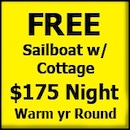
Key Lime Sailing Club, A SALTY SOUTHEAST CRUISERS’ NET SPONSOR, always has very special offers for their visitors! Key Lime Sailing Club is on the Inside Route side of Key Largo. Key Lime Sailing Club is a unique slice of KEYS ENJOYMENT…give it a try and let us hear about your experience.
Welcome to our unique little hideaway. Secluded, serene, and perfectly located, our self-contained cottages have everything you need for a relaxing waterfront vacation.
Hey Winston, thank you very much for checking in. We’re doing fair, we have seven of our cottages open for Keylime sailing club. We’re still cleaning up and repairing and we have yet to get to South Dade Marina. The marina still has boats sitting on top of the dock; 40% of the dock is missing; the sunken boats and boats on the shore. But we will rebuild. And I know we share the story with a lot of marinas and places of business. I count ourselves lucky and pray for the people that have suffered much more than us. Paul Keever
Key Lime Sailing Club, A SALTY SOUTHEAST CRUISERS’ NET SPONSOR, always has very special offers for their visitors! Key Lime Sailing Club is on the Inside Route side of Key Largo. Key Lime Sailing Club is a unique slice of KEYS ENJOYMENT…give it a try and let us hear about your experience.
Don’t you wish everyone would use and respect those safety limits!
There is an app called WakeWatch that maps out all of the no wake zones in FL. It also tells what type of zone – i.e. slow speed minimum wake, no wake, speed limits, etc. with the associated time restrictions. It also has all of the bridge heights and opening schedules.
Key West Mayor, Craig Cates, said they are targeting October 20th as their goal to officially reopen to tourists in time for the annual “Fantasy Fest”.
FOUNDERS PARK AND PLANTATION YACHT HARBOR MARINA ARE CLOSED TO THE PUBLIC
DECEMBER REOPENING PLANNED
Founders Park (MM 87 bayside in Islamorada) is being utilized for Florida Keys Electric Cooperative repair crews and as a staging site for vegetative debris from Hurricane Irma being picked up from neighborhoods and properties in the Village. It is not safe to use any Founders Park facilities and the park is completely closed to the public.
Given the time it will take to collect, grind and remove the massive amount of debris from neighborhoods and properties throughout the Village, it is anticipated that reopening of Founders Park will not occur until December 2017. The pool will be covered to protect it from the effects of the debris grinding.
All events scheduled to be held at Founders Park will be cancelled or relocated to a different venue.
The Plantation Yacht Harbor Marina, including the boat ramp and fuel dock, will also be closed for public use during the time Founders Park is closed. Long-term Marina residents may continue to reside at the marina, but no new reservations will be made.
The Village Council and Village staff are aware of the importance of Founders Park to the community and will strive to resume operations as quickly as possible.
Led2Serve is a corp of volunteers assisting residents and communities following natural disasters such as Hurricane Irma. All skills are welcome and Cruisers Net encourages you to make a commitment to this worthy and much needed service.
This Service Mission Journey is for anyone looking to engage in meaningful serving projects and support the community in and around Key Largo, Islamorada, and Marathon, Florida.
Key Lime Sailing Club is on the Inside Route side of Key Largo.
Key Lime Sailing Club and Cottages
Thank you everybody for the prayers and support that you gave to KLSC and all the people affected by the hurricane. The whole team is grateful and overwhelmed by the love you are giving us. The worst is over and it is now time to rebuild. Right now we have Led2Serve coordinating with us to help with the recovery effort. Thanks to Vanessa of Led2Serve for being proactive and being in touch before and after the storm. To our friends and guests that want to come down to help, thank you so much! As of now the Keys has limited access. Paul may contact you when the authorities will allow the people to come in again.
The REEF Fest seminars are open to the general public and will be held at the Murray Nelson Government Centre, 102050 Overseas Highway, Key Largo, FL 33037. Pre-registration via schedule link below is recommended. This notice comes from DeeperBlue.
Marine conservation is being celebrated in Key Largo, Florida from September 28 to October 1, 2017 at REEF Fest 2017. The annual celebration of the positive impact marine conservation has had on the Florida Keys promises to provide a weekend packed with fun and engaging activities. The celebration hosted by the Reef Environmental Education Foundation has organised a series of events, seminars, diving activities, and a banquet to increase awareness of conservation in the area.
Comments from Cruisers (2)
It seams to me that the big marinas are really controlling the cost of docking more so than ever, in St. Petersburg the safe harbor group will get control of the city docks soon, that means they have a monopoly controlling all the docks and moorings in St. Petersburg.
As for anchoring I don’t have any problems with this except that Most anchorage’s have bad boat that are in kept and in danger of abandonment also there is a problem with pumping out this is a federal regulation that is always over looked
Anchorage for transit moorings and dingy docks is a good idea for everyone at a minimum price if not totally free.
You are absolutely correct,Steve. I traveled in a trawler from North Carolina to Louisiana for many years and enjoyed the many towns and anchorages along the way. Not nearly as many anchorages as there used to be. And many more restrictions on the ones that are left. Florida, especially , seems to discourage boating. Especially transient boating. I got tired of the hassle and high cost of marinas, moorings, and dockage and got out of boating. It’s not affordable for the average pocketbook anymore. It’s just one more thing that belongs to the people with a lot of money. The middle class will soon be no more.
My opinion,
Jerry