Cast Off Fishing Continues! – Charleston County Parks
What’s Happening In Your Parks – Charleston County Parks
| ||||||||||||||||||||||||||||||||||||||||||
| ||||||||||||||||||||||||||||||||||||||||||
|


What’s Happening In Your Parks – Charleston County Parks
| ||||||||||||||||||||||||||||||||||||||||||
| ||||||||||||||||||||||||||||||||||||||||||
|
Cruisers Net publishes Loose Cannon articles with Captain Swanson’s permission in hopes that mariners with salt water in their veins will subscribe. $7 a month or $56 for the year, and you may cancel at any time.
When all else fails, try journalism. Politician Says This Species Is Getting Too GreedyBill To Address Sharks Bitting off Hunks of Fish We’ve Caught

The author is an 8th-generation Floridian, born and bred in Tallahassee, which probably explains her unhealthy fascination with Florida politics. Educated at Florida State University and Oxford University in England, she has been writing for newspapers since 1983. Her work has appeared in the New York Times, the Times of London, the Guardian, the Washington Post, the Oxford American, and Flamingo. This opinion piece was published on August 11, 2025 in the Florida Phoenix and is reprinted here with permission. By DIANE ROBERTSThe sharks are eating the fish. Too many fish. Our damn fish. For 450 million years, the sharks have had everything their way, swimming around the ocean like they own the place, chowing down on that endless seafood buffet. Who do those sharks think they are? Other than, like, sharks. We celebrate George Washington and Abraham Lincoln one lousy day a year. Sharks get a whole week. No más. Florida Republican U.S. Sen. Rick Scott means to show these arrogant top predators he means business. Sen. Scott’s elegantly named and creatively capitalized “Supporting the Health of Aquatic systems through Research, Knowledge, and Enhanced Dialogue (or SHARKED) Act will address bad behavior in the shark community.¹ No longer will the sharks be allowed to appropriate fish for their own selfish nutritional ends. It’s a bipartisan effort: Sen. Brian Schatz, a Democrat, is Scott’s SHARKED co-sponsor, although he’s being cautious about what he says. Schatz is from Hawaii, where certain sharks are considered sacred, what with them being people’s reincarnated ancestors. Funnily enough, Schatz was once part of the shark-coddling caucus, all-in on legislation to protect those deep sea devils. But he’s clearly seen the light, read the room, and smelled the Trumpy zeitgeist: It’s all about the money. Sport fishing in Hawaii is worth hundreds of millions. Scott also once expressed a bit of sympathy for sharks. When he saw images of boaters “abusing a young tiger shark in Citrus County,” he wrote a tough letter to the head of NOAA demanding somebody do something. The senator still wants somebody to do something, and, by God, the Scott-Schatz bill is going to do it. More or less. ‘Unnatural Food Source’It directs the secretary of commerce to put together a task force to figure out why elasmobranch cartilaginous fishes (as ichthyology nerds call them) gobble up the very fish sportsmen and women spend so much cash to catch. You drop big money on a three-day charter out of Destin, spend another grand on your Yeti cooler, your Bora Bora hat, your Columbia convertible pants, your Coors, your Jack, your Pringles, your Publix subs, your peanut M&Ms, you finally get something on the line, but next thing you know, Mister Jerk Shark smells the blood in the water, swims up, and takes a big old bite of your 400 lb. blue marlin. OK, maybe the shark was hungry, but that’s no excuse. The American Sportfishing Association, the American Fisheries Society, and others rightly upset about sharks’ indefensible habit of consuming their usual source of protein, complain “shark depredation is clearly detrimental to anglers and predated fish that would otherwise be released.” They point out all that illicit predation “creates an unnatural food source for sharks.” The sharks would argue fish are, in fact, their entirely natural food source, but if it comes to a choice between those toothy behemoths and a $230 billion industry, the sharks lose. Bottom line: Sharks are hurting the economy. This is a condensed version of Diane Robert’s full essay “Pitted against capitalism, poor sharks don’t stand a chance,” linked here. LOOSE CANNON covers hard news, technical issues and nautical history. Every so often he tries to be funny. Subscribe for free to support the work. If you’ve been reading for a while—and you like it—consider upgrading to paid. 1 Yes, humor aside, this is an actual bill. It’s goal is to “address shark depredation” and develop “techniques and strategies to reduce harmful interactions between sharks and humans, including the development and use of non-lethal deterrents.” National Marine Fisheries must report back to congress on this topic in two years. You’re currently a free subscriber to LOOSE CANNON. For the full experience, upgrade your subscription.
© 2025
|
Royal Marsh Harbour Yacht Club is a premier yacht club in the Abacos and A CRUISERS NET SPONSOR! If you cruise to the Abacos and the Marsh Harbour area, you should consider joining this great group of like-minded cruisers.

|
Cruisers Net publishes Loose Cannon articles with Captain Swanson’s permission in hopes that mariners with salt water in their veins will subscribe. $7 a month or $56 for the year, and you may cancel at any time.
When all else fails, try journalism. Pursued Oh-So-Slowly, Heroic Ship Kedges Her Getaway‘Rope’ Excerpt: How ‘Old Ironsides’ Used an Anchor and a MILE of Line
From ‘“ROPE: How a Bundle of Twisted Fibers Became the Backbone of Civilization” by Tim Queeney. Copyright ©2025 by the author and reprinted by permission of St. Martin’s Publishing Group. By TIM QUEENEYTHE JULY MORNING IN 1812 was sublime, with fair-weather clouds puffed across the sky and a light breeze rippling the Atlantic off the New Jersey coast. While conditions were balmy that day, the sailors of the powerful U.S. Navy frigate USS Constitution were too busy to notice. They were aloft in the rigging of the three-masted ship working the ropes—untying reefing nettles, loosing buntlines and clewlines, and shaking out the canvas of the man-of-war’s sails. Their instructions were to set every piece of canvas. The sailors used the ship’s ropes to set the sails to get as much speed as could be wrung from the weak wind. The events of the next few days would prove the vital importance of rope in the period between the 1450s and 1880s, called the Age of Sail, when wind-driven ships ruled the seas. That July the conflict between Britain and the United States, the War of 1812, was only a month old. USS Constitution had been ordered from Annapolis, Maryland, to New York City, where Commodore John Rodgers was forming a squadron of American warships. The Constitution needed to get to New York as fast as possible, before the Royal Navy succeeded in establishing a blockade and bottling up the American ships. The captain of the Constitution was Isaac Hull, an experienced commander and ship handler. He was so determined to join up with Rodgers that when a masthead lookout sighted the masts and sails of five ships on the horizon off Egg Harbor, New Jersey, Hull assumed that Rodgers had departed New York with his squadron and was sailing south to meet Hull and the Constitution. Even with all sails set, the wind was light, and the Constitution made slow progress through the day. But there was reason for good cheer aboard the frigate: soon the Constitution would add its firepower to Rodgers’s squadron. As the five ships grew near, however, Hull had growing doubt about their status. As night fell, Hull ordered the U.S. Navy to light signal lamps to the nearest ship, off to the northeast. The ship did not respond with the counter signal, further raising Hull’s suspicions. When morning came, Hull saw that the five ships had spread on all sail and were headed toward the Constitution. And each flew the ensign of the British Royal Navy. The five ships bearing down on the Constitution were not Rodgers’s American squadron, but the British warships HMS Africa (64 guns), HMS Guerriere (38 guns), HMS Belvidera (36 guns), HMS Aeolus (32 guns), and HMS Shannon (38 guns). Even though the Constitution was a heavy frigate of 44 guns, Hull couldn’t hope to fight five opponents mounting a combined 208 guns. And for Hull to lose the Constitution would be a terrible blow to the small American navy of only eighteen ships. Hull had no choice but to turn and run from his pursuers. Sailors scrambled across the deck and into the rigging. They handled the myriad ropes that controlled the sails as the ship made a painfully slow turn in the light wind. As the Constitution gybed before the wind, the enemy continued to close. Hull had his crew put on all sail, including the studding sails, which sit outboard of the main sails on either side and give the ship the look of sporting white wings. The wind dropped to nothing for the Constitution, while the British ships still had a light breeze. Hull had to keep his ship moving, but the wind had betrayed the Americans. So he ordered the ship’s eight small boats launched. Rope would play another important role: as towing lines from the small boats to the Constitution. These boats were all equipped with oars, and the sailors who manned them could row and pull the ship along behind them. The sailors now worked the oars for all they were worth, slowly towing the ship forward. Soon the British lost the wind as well and the American sailors’ exertions kept the U.S. frigate just out of reach. The Constitution was losing the race, however. The British had cleverly sent the small boats of all the ships in the squadron to tow the Shannon, the closest frigate to the Constitution. And with roughly thirty boats pulling the Shannon forward with rope-tow lines, the British frigate was gaining on the Americans. Something else was needed, or the Constitution would have to fight, allowing the other British ships to catch up and combine their cannons against the Constitution. Hull had his men wet the sails with seawater so the canvas could catch every bit of the weak, fitful wind. He also ordered the crew to pump more than 2,000 gallons of water overboard to lighten the ship. The Constitution’s first lieutenant, Charles Morris, then hit upon an idea. He instructed the leadsman to throw his lead line (a rope attached to a lead weight that sank to the bottom for measuring water depth). The Constitution was in a depth of 26 fathoms (156 feet). Morris suggested to Hull that this depth allowed them to use a technique called “warping,” a method of moving the ship forward with the use of a special anchor called a kedge. This was a smaller anchor than the ship’s main anchors and could be carried forward in one of the ship’s boats and dropped over the side. The anchor would fall to the bottom, and then sailors on board the ship could turn the large, manually driven anchor winch to reel in the anchor line and pull the ship forward toward the kedge anchor. Morris had been aboard the U.S. Navy frigate President when the technique was used, and it had attained a speed of up to 3 miles per hour—slow indeed, but perhaps it would be enough to keep the British hounds at bay. The biggest question was: Given the water depth, did the Constitution have enough heavy rope on board to make the technique work? They needed to take the kedge anchor far out ahead of the vessel so the down angle of the anchor rope would be a narrow one. An anchor rope too short meant the angle would be too steep and the anchor would not grab the sea bottom; it would pull up as soon as the rope was tensioned. Morris quickly made an inventory of heavy rope aboard the Constitution. He wrote this in his account of the chase: “We had been on soundings the day before, and on trying we now found [the depth to be] twenty-six fathoms. . . . It gave me confidence to suggest to Captain Hull the expediency of attempting to warp the ship ahead. He acceded at once; and in a short time, the launch and first cutter were sent ahead with a kedge [anchor], and with all the hawsers and rigging, from 5 inches and upward, that could be found, making nearly a mile of length.” With this nearly 6,000 feet (a nautical mile) of rope attached between the kedge anchor and the ship, the crew commenced warping the ship forward. Now, in addition to the sailors rowing the ship’s boats, sailors on the deck of the Constitution put their backs into the task of escape. When the ship had been brought close to the anchor, the kedge was raised, brought forward again, dropped, and the process repeated. The 420 men of the Constitution kept up this exhausting routine all day and through the night. Though the British frigate Shannon was able to draw even with the Constitution and managed to fire a few cannons at the American frigate, the British cannonballs did no damage. Finally, after fifty-seven hours of pursuit, Hull kept his ship just far enough away from the British that when a wind sprang up, the Constitution slowly pulled away from her pursuers. By the morning of the third day, the British ships, now having fallen several miles behind, gave up the chase. Without the lengthy ropes Morris found on board and tied together to make up that nearly mile-long anchor line, the Constitution would have been captured. The ship would very likely not grace the Boston Navy Yard as she does today, still a commissioned ship in the U.S. Navy. LOOSE CANNON covers hard news, technical issues and nautical history. Every so often he tries to be funny. Subscribe for free to support the work. If you’ve been reading for a while—and you like it—consider upgrading to paid.
You’re currently a free subscriber to LOOSE CANNON. For the full experience, upgrade your subscription.
© 2025
|
Cruisers Net publishes Loose Cannon articles with Captain Swanson’s permission in hopes that mariners with salt water in their veins will subscribe. $7 a month or $56 for the year, and you may cancel at any time.
When all else fails, try journalism. Without Wind, Kids Couldn’t Escape Fatal Barge Hit, Lawyer SaysAttorney: Coast Guard Balking at Criminal Investigation
The Hobie catamaran run down by a barge late last month was effectively adrift and unable to get out of the way, even though her skipper could see the 200-ton commercial combo coming at them, according to the lawyer suing on behalf of one of the victims. The barge ran over the 17-foot Hobie, capsizing it and resulting in the deaths of three girls, ages 7, 10 and 13, who had been learning how to sail. They were participants in a sailing program sponsored by the Miami Yacht Club and under the tutelage of a 19-year-old camp counselor. Attorney Judd Rosen of Miami represents one of the survivors, a nine-year-old. (Six were on board. The counselor and a fifth girl also survived.) Rosen said the engineless Hobie was unable to maneuver to avoid the barge because of light air. “They could see the barge. They just couldn’t move the boat to get out of the way,” he said.
Forecasts for that day—July 28—called for winds of less than 10 knots. A screenshot from a video in the moments before the barge impact shows nearby sailboats with drooping sails. A video of the Hobie shows a close-hauled sail on mast standing straight up right up until the collision. Sailors on Facebook, ignorant of any weather factors and eager to debate rules of the road, were split between blaming the barge skipper and blaming the Hobie skipper. The parents’ lawsuit finds fault with both by naming the barge owner and the yacht club (and its sailing camp) as defendants. The lawsuit was filed last week in Miami Circuit Court. It asks for damages as determined by a jury trial. According to the lawsuit, the counselor in charge of the boat was “careless, reckless and negligent” for her failure to avoid collision. Rosen said she had a handheld VHF, which she was using to communicate with the yacht club but did not use to warn the tug captain. The yacht club was to blame for its “unqualified and improperly trained counselors.” In an interview with Loose Cannon, however, Rosen seemed to reserve his harshest criticism for the crew of the barge. Rosen said there was apparently no observer at the front of the barge at the critical moment, even though the tug’s captain was blocked by a crane and construction material from seeing what was in front of him. According to Rosen, the barge was traveling 3.5 knots, not fast, but with 200 tons of mass, not easily stopped either. “If they had a proper lookout, they could have dropped the spuds and stopped the barge within 10 to 20 feet,” he said. Illustrations From Goldberg & Rosen
The fact that the barge captain failed to blow five blasts on the horn as a warning to the Hobie was indicative that no-one saw it coming, Rosen said. According to the lawsuit, defendant Waterfront Construction, owner of the barge, failed to hire adequately trained employees and did not have “a sufficient number of employees present on the subject barge…to keep an adequately lookout for other vessels.” (One of the news stories reported that the crew consisted of a captain and one other man.) Attorney Lorenzo Palomares, representing Waterfront Construction, told CBS News that the crew “absolutely tried to avoid hitting the sailboat.” An “experienced lookout” saw the sailboat before the crash, and the tug-and-barge crew “acted reasonably,” Palomares said. Speaking to Loose Cannon, Rosen did something a little unusual and walked back a key assertion in the parents’ lawsuit. He contradicted language in the suit that said the daughter had suffered “permanent injuries as a result of the incident.” The parents now say she was recovering from minor injuries. The Miami Herald quoted the girl’s dad:
According to Rosen, the Coast Guard was not undertaking a criminal investigation and had assigned the probe to the branch’s civil fact-finding team. Seeing that as a failure, the parents were motivated to go to court, not only to represent their own family interests but on behalf of the girls that died, other sailing program participants and the community at large. When the Coast Guard refused to divulge the name of the tug captain, they decided to file suit at once, only 11 days since the accicent. “I wasn’t going to wait around for them to release information,” Rosen said. The language of the lawsuit appeared to suggest that it was a bad idea to train children to sail on busy Biscayne Bay at all. Not quite, Rosen said, but if you are going to teach kids in a busy port like that, there need to be more safeguards in place, such as multiple chase boats and areas designated as off limits to commercial traffic. LOOSE CANNON covers hard news, technical issues and nautical history. Every so often he tries to be funny. Subscribe for free to support the work. If you’ve been reading for a while—and you like it—consider upgrading to paid.
You’re currently a free subscriber to LOOSE CANNON. For the full experience, upgrade your subscription.
© 2025
|
Cruisers’ Net Newsletter for this week has just been emailed via Constant Contact.
If you want to view the newsletter but are not signed up to receive them automatically, you can view it at https://conta.cc/4mAqC8D or see it below.
To automatically receive our emailed Fri Weekly Newsletter and Wed Fuel Report, click:
What’s Happening In Your Parks – Charleston County Parks
| |||||||||||||||||||||||||||||||||||||||||||||||||||||||||||||
| |||||||||||||||||||||||||||||||||||||||||||||||||||||||||||||
|
Harborwalk Marina, A CRUISERS NET SPONSORS, is only a boardwalk stroll away from Georgetown’s Historic District for history, entertainment, great food, and shopping. Harborwalk Marina is the third marina on your starboard side as you enter the protected waters of Georgetown.
Our thanks to Chris Carroll, Operations Manager for Harborwalk Marina, for this “good news” information!


Click Here To View the Cruisers Net South Carolina Marina Directory Listing For Harborwalk Marina
Click Here To Open A Chart View Window, Zoomed To the Location of Harborwalk Marina
Harborwalk Marina, A CRUISERS NET SPONSORS, is only a boardwalk stroll away from Georgetown’s Historic District for history, entertainment, great food, and shopping. Harborwalk Marina is the third marina on your starboard side as you enter the protected waters of Georgetown. Our thanks to Chris Carroll for this “good news” article!
 |
Click Here To View the Cruisers Net South Carolina Marina Directory Listing For Harborwalk Marina
Click Here To Open A Chart View Window, Zoomed To the Location of Harborwalk Marina

I personally use Kanberra products on my boat
and can attest to their effectiveness.

 Designed to blend seamlessly into its surroundings, it’s the understated elegance you’ve been searching for. 24oz Kanberra Gel Refill Pouch 2 x 6oz + 2 x 3oz Barely There Jars
From our friends at South Florida Sun Sentinel, if you are near Fort Lauderdale this weekend consider spending time at the Beachfront Grand Prix Festival.
Here’s what forecasters think the rest of 2025 hurricane season will look like


The National Oceanic and Atmospheric Administration issued an August update to its 2025 hurricane season outlook, slightly lowering its prediction for how many storms to expect.
However, the forecast still calls for this year to have an above-average season, and conditions are aligning for more tropical activity as we enter the peak hurricane period.
On Thursday, NOAA said it adjusted the range of named storms from 13 to 19 down to 13 to 18. There have been four named storms so far this year and no hurricanes.
It similarly adjusted the number of hurricanes down to five to nine overall, and lowered the low end of major hurricane numbers by one, to two to five.
The May forecast predicted there was a 60% chance of an above-normal hurricane season. That probability has been lowered to 50%.
Though numbers have been adjusted down, the season is entering its peak period and ocean and atmospheric conditions still favor an above-normal season, said the report.
The prediction of an above-average remainder of the season is based on a combination of factors, including warmer-than-average sea-surface temperatures in the tropical Atlantic Ocean and Caribbean Seas, and an active West African Monsoon.
There is neither an El Niño nor La Niña this summer. El Niños tend to increase wind shear over the Atlantic, which can topple hurricanes. La Niñas tend to reduce wind shear.
“Many of the factors we identified ahead of the season are still at play, and conditions are largely tracking along with our May predictions,” said Matt Rosencrans, lead hurricane season forecaster with NOAA’s National Centers for Environmental Prediction, part of the National Weather Service.
Other factors that tend to accelerate hurricane likelihood from August through October include the dissipation of Saharan Dust. Large plumes of dry desert dust travel across the Atlantic in early summer, but tend to fade in August.
West African monsoons, which develop farther south on the continent, also begin traveling into the tropical Atlantic more frequently at this time of year. Those systems can develop into tropical cyclones.
NOAA emphasized that the outlook is not a landfall forecast since short-term weather patterns influence landfall quickly.
The hurricane season runs through November.
Cruisers’ Net Newsletter for this week has just been emailed via Constant Contact.
If you want to view the newsletter but are not signed up to receive them automatically, you can view it at https://conta.cc/4mAqC8D or see it below.
To automatically receive our emailed Fri Weekly Newsletter and Wed Fuel Report, click:
What’s Happening In Your Parks – Charleston County Parks
| |||||||||||||||||||||||||||||||||||||||||||||||||||||||||||||
| |||||||||||||||||||||||||||||||||||||||||||||||||||||||||||||
|
Cruisers Net is proud to be a member of the Atlantic Intracoastal Waterway Association, whose lobbying work is crucial to keeping the Waterway navigable and safe. Your membership dollars directly support their vital work. Please join and encourage your boating neighbors to do the same, regardless of their home port.
|
Cruisers Net publishes Loose Cannon articles with Captain Swanson’s permission in hopes that mariners with salt water in their veins will subscribe. $7 a month or $56 for the year, and you may cancel at any time.
When all else fails, try journalism.
The owner of the rental company whose center-console was recently stolen and taken to Cuba has recovered his boat in the most ironic way possible. Jayme Nabors, a wheeler-dealer from the Florida Panhandle, mounted his own unauthorized trip to Havana with a boatload of buddies and then, with a little help from the U.S. Coast Guard, managed to convince Communist functionaries to free his little lost Panga panga. A panga is the ubiquitous Mexican workboat design, and Panga is a U.S. manufacturer that builds pangas for the American recreational market, including some center-console models. That includes the 26-footer rented for use in the Florida Keys and then taken to Cuba by Floyd Dean Devasier, 63, of Katy, Texas. The panga’s tracker showed the boat was en route to Havana right up until it went beyond cellphone range.
Using advanced law enforcement technology known as the telephone, U.S. Coast Guard officials notified Cuban Border Guards, with whom they have a longstanding working relationship, that Devasier was heading their way. The Cubans were waiting when he arrived. Shortly thereafter the dude was on a plane heading back to Florida where he was taken into custody by another set of cops and charged. Meanwhile, Nabors wanted his $70,000 boat back and had no idea how to make that happen, and, frankly, no one to ask, because no one had ever done something like that, or, if they had, they kept it to themselves. The elephant in the room—because this is GOP-driven policy—is the fact that American citizens cannot take their American boats to Cuba legally. According to Cuba expert William LeoGrande, the “Embargo” against Cuba is “the oldest and most comprehensive U.S. economic sanctions regime against any country in the world.” President Obama relaxed regulations enough in 2014 to allow American boaters (and cruise ships from American ports) to visit Cuba as long as everyone pretended they were there for some purpose other than tourism. In his first term, Trump turned the clock back on this policy, and President Biden never got around to reversing the reversal of the reversal. However, there is a process by which a U.S. boater can take a boat to Cuba. The trip must be approved by the Treasury, Commerce and State departments, capped off by receipt of Coast Guard form 3300 “permit to enter Cuban territorial waters.” Oh, and by the way, your applications will all be denied, per the U.S. President. Nabors conferred. He talked to the Coast Guard and other Homeland Security officials. He talked to the Sheriff’s Office in the Keys. He said he filled out all the forms and submitted all the necessary applications. And, then, Nabors waited patiently for answers from U.S. officialdom. No, he didn’t. Nabors gathered together seven business friends, partners, employees and adventurous spirits at his marina in Key West—he owns three Florida marinas—and got ready to thunder on down to Havana. A Cuban emigree from Tampa, whom nobody knew, showed up and managed to insinuate himself into this pack of Southern dudes and a gal.
There were nine of them. They brought extra gasoline in case the Panga was on “e.” They brought spare parts and the tools to install them. If the Merc outboard wouldn’t go, they had the gear for a tow. Nabors confessed to some wishful thinking. “We were under the impression we could come and grab the boat without ever going through Cuban Customs,” he said. By the time the gang was ready to go, Nabors said he believed U.S. officialdom knew what they were up to, and they never tried to call a halt to it. “Everybody on our side knew exactly what we were doing and when we were going to leave,” he said. On July 22, the Mighty Nine boarded an Invicible 36 and slipped out of Key West and across the Florida Straits to execute “Operation Beach Weekend,” Beach Weekend being the name of Nabor’s marina business. Here, it should be mentioned that there is a YouTube video about the trip, and one of two podcasts on the subject has also been released. The podcast is called Nicotine & Jetfuel with Nabors and Brett Divine. Nabors felt that his marinas and his other “lifestyle brands” could get a boost from the exposure. The YouTube video captures the dual nature of the three-day expedition. Most of the video strings together moments of party behavior and one-liners by the guys. There are aso scenes showing the crew waiting around—in one, waiting on the boat for hours for word from Cuban officials, looking frazzled and, perhaps, needing a toilet.
The U.S. Coast Guard attache at the American Embassy in Havana was vacationing with his family in North Carolina. This officer, who would be a commander or lieutenant commander, flew back to Havana to assist in getting the boat released. Nabors said he brought as much documentation as he thought necessary to free the panga, but the Cubans had demanded more. Coordinating with support staff back in the states, Nabors got the additional paperwork sent to the embassy itself, where staff ensured it was all properly certified.
Two days after their voyage had begun, but not until after more hours of paperwork inspection and searches of both boats, Cuban authorities released the panga to Nabor and his crew. “State sponsor of terrorism” aside, those Communists had showed zero tolerance for ordinary criminal behavior. Nabor seemed impressed that no one had hit him up for a payoff. Had American officials really given tacit approval to Nabor’s apparently unlawful recovery operation? He thinks so. “We went for it, and, thank the Lord, it worked out,” Nabors said. LOOSE CANNON covers hard news, technical issues and nautical history. Every so often he tries to be funny. Subscribe for free to support the work. If you’ve been reading for a while—and you like it—consider upgrading to paid.
You’re currently a free subscriber to LOOSE CANNON. For the full experience, upgrade your subscription.
© 2025
|
Cruisers Net publishes Loose Cannon articles with Captain Swanson’s permission in hopes that mariners with salt water in their veins will subscribe. $7 a month or $56 for the year, and you may cancel at any time.
When all else fails, try journalism.
As the editor of Ocean Navigator, which was always one of boating magazines worth reading, Timothy Queeney had a pretty good run. He left the magazine after it was sold in 2021 (and was shut down permanently earlier this year). Loose Cannon recently spoke to Queeney about his reinvention as an author with a first-book about to go on sale. Loose Cannon: Tim, Bravo on ROPE! In hindsight such an obvious topic. What made you decide to write this book? Tim Queeney: The inspiration to write ROPE came from… a rope. We always had sailboats when I was growing up and so there was plenty of line around my parents’ house. After my dad died some years ago, my mom suggested I take the milk crates of boat rope home with me to Maine. Over the next few years I used pieces of that rope for various tasks ashore and afloat. One day I grabbed a line from the crate for some purpose but it was knotted in an awkward place. I was about to loosen the knot when I stopped and realized that my dad’s fingers had tied it. It was a physical sign of him still here in the world. I hung that line, knot intact, on the wall and began to think about rope in a way I hadn’t before. After rooting around online I found no one had written a book about rope and its significance in human history. That seemed like a missing piece so I thought I might tell that story. L.C.: Two things: I’m surprised that some 18th century dude like Benjamin Franklin hadn’t already done his own version. And second, I can’t think of another topic that would be equivalent in its breadth and early origins. A History of Pointy Things, maybe? Is there any other book out there comparable to ROPE, old or new? Queeney: Yeah, Ben was pretty wide ranging in his interests but he apparently didn’t get around to rope. I would think a history of the wheel or something along those lines. L.C.: Ha! I just imagined the caveman riding a stone wheel from one of those old Johnny Hart comics. I marveled at the figures for rope on Age of Sail ships—miles of lines—and the many other eye-opening details. Once you had decided to do the book, did you really have to dig or were the details in plain sight just waiting for an author?
Queeney: There was plenty of great material easily available. Much of the book that discusses the use of rope on sailing vessels, for example, is well known to anyone with an interest in maritime history. But for readers who aren’t so well versed, I attempted to keep that material as simple and accessible as possible. And I certainly discovered some aspects I was not familiar with. That’s a fun part of research, stumbling across things you hadn’t considered before. I also did some deep digging, which is also a little addictive for research heads like me. One thing leads to another and you realize you’ve gone many layers deep—and maybe a bit off track as well! I also did 33 interviews with various experts. Those were always illuminating and enjoyable and invariably led me to new aspects of the subject. As you know from your journalism experience, so often in an interview it’s when you’re chatting after the interview is “over” that some of the most interesting items emerge. L.C.: Could you address the concept of “rope” in the English language? The presence of so much cordage in our daily speech is surely an indicator of its importance as a technology. Queeney: The English word rope has a derivation that goes far back into ancient languages. It comes from the Middle English rop, from the Old English word rap. And that comes from the Germanic tree as the Proto-West Germanic raip, which, in turn, arises from the Proto-Germanic raipaz or raipa. Pushing even further back into Proto-Indo-European (which is a bit of linguists’ reconstruction as there is no direct record of Proto-Indo-European, but we’ll take their word for it!) we get roypnos. As for rope’s cultural significance, there are plenty of common sayings that point to how central rope has been to daily life: roped me in, rope it off, tied in knots, rope-a-dope, roped and branded, give him/her enough rope, at the end of my rope, throw me a rope, give me some slack, on the ropes, etc. L.C.: What is the thing you learned that surprised you the most? Queeney: There were plenty of revelations when it came time to look into the subject in detail. I was surprised that rope-making technology had progressed so far so early. The Cheops solar boat was found in a pit alongside the Great Pyramid in the 1950s. Along with the pieces of the deconstructed boat were coils of three-strand line that looked like it had been manufactured recently, but in fact was 4,500 years old! L.C.: If they’d found coils of dyneema, I suppose it would be proof that aliens built the pyramids. Hey, do you remember when we talked before this interview that my mother used to say “Go run up a rope” as a substitute for “Go eff yourself?” Your end-book scenario about hoisting payloads into space using a rigid graphene matrix instead of rockets would actually make running up a rope possible. What next for the former magazine editor turned author? Queeney: Next for me is, unsurprisingly, another book. I have a series of nonfiction book ideas lined up and am working on the next one. As a committed fan of ink and paper (and I guess electrons too when it comes to the ebook version), I will keep plugging away in the book world as long as they’ll have me.
Coming soon: An excerpt from ROPE tells the tale of the USS Constitution’s slow speed kedging escape from a pursuing British fleet. LOOSE CANNON covers hard news, technical issues and nautical history. Every so often he tries to be funny. Subscribe for free to support the work. If you’ve been reading for a while—and you like it—consider upgrading to paid.
You’re currently a free subscriber to LOOSE CANNON. For the full experience, upgrade your subscription.
© 2025
|
Cruisers’ Net Newsletter for this week has just been emailed via Constant Contact.
If you want to view the newsletter but are not signed up to receive them automatically, you can view it at https://conta.cc/4fbsAd1 or see it below.
To automatically receive our emailed Fri Weekly Newsletter and Wed Fuel Report, click:
July 31, 2025
NEWS from BoatUS
Boat Owners Association of The United States
5323 Port Royal Rd, Springfield, VA 22151
BoatUS News Room at
FOR IMMEDIATE RELEASE
Press Contact: D. Scott Croft, Vice President Public Affairs, 703-461-2864,
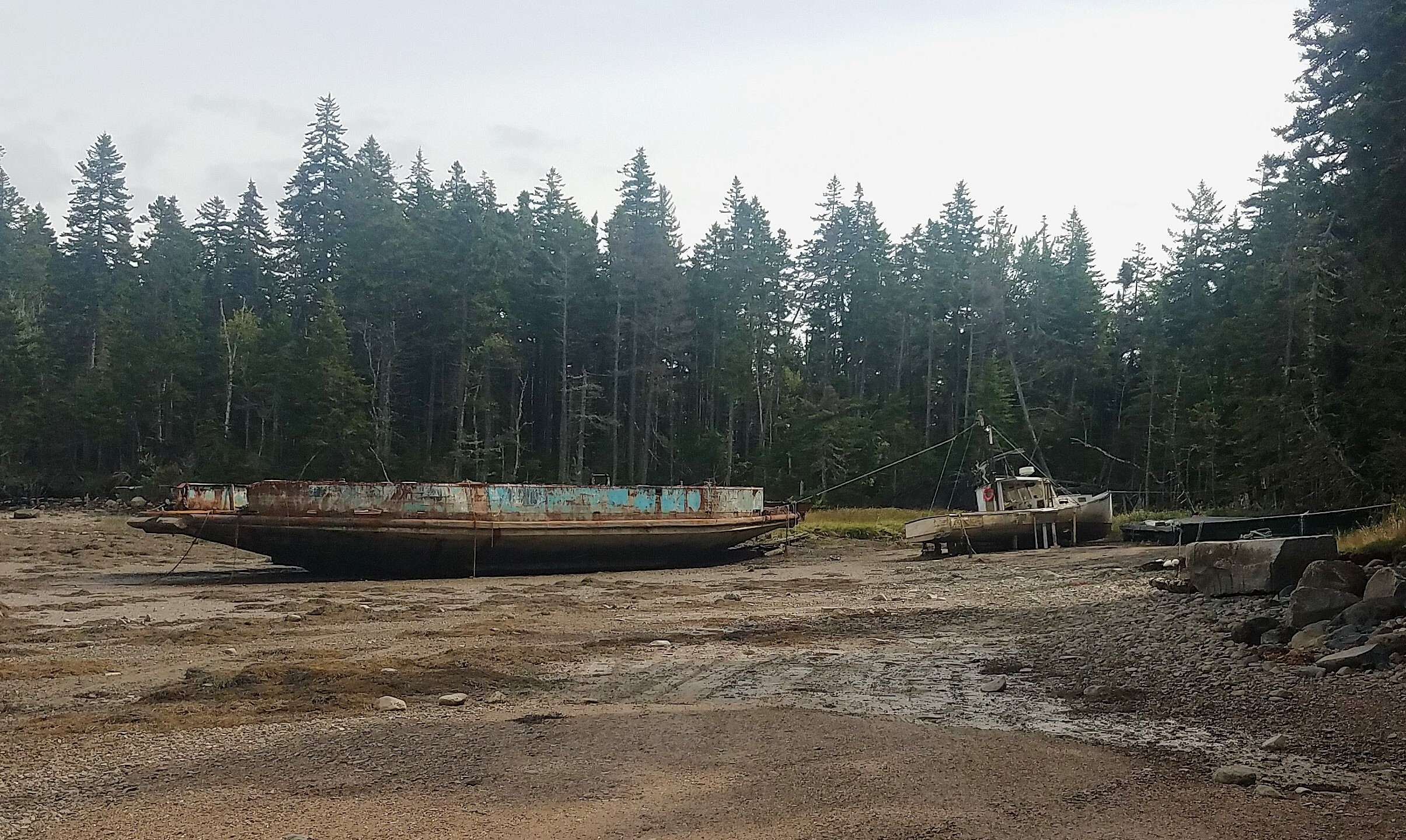
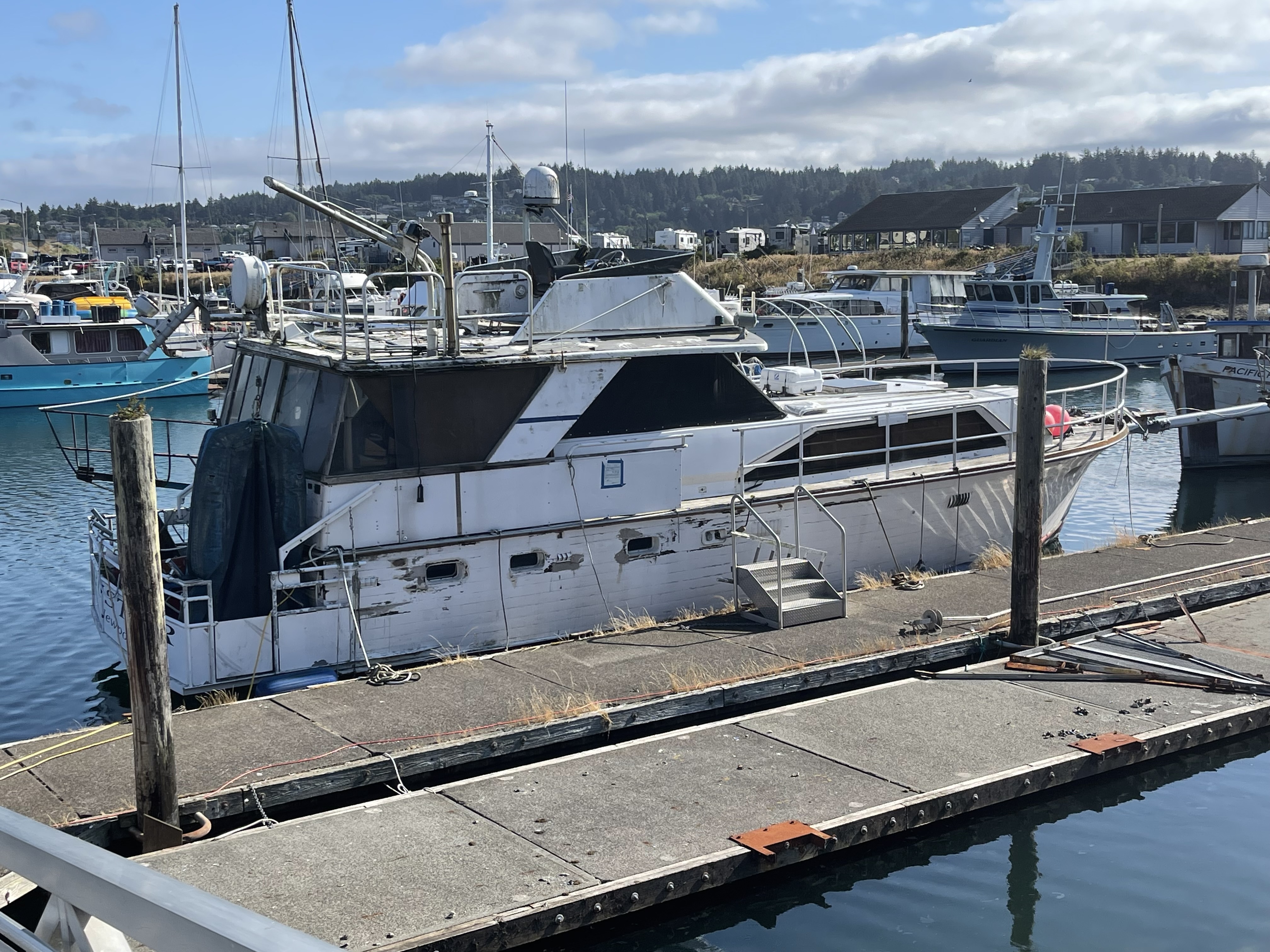
SPRINGFIELD, Va, July 31, 2025 – In a first-of-its-kind effort across six states and two unincorporated territories, dozens of coastal communities will see a significant investment in removing more than 300 abandoned and derelict vessels (ADVs) from their local waters. With four-year project funding from the National Oceanic and Atmospheric Administration (NOAA) Marine Debris Program, administered through the BoatUS Foundation for Boating Safety and Clean Water, the ADV grants will fund removal and education efforts in communities heavily impacted by ADVs and the navigation, safety and pollution hazards they pose.
The projects were selected by a panel of independent salvage experts, state boating advocates, nonprofit research organization and planning agency staff under a program created by the nonprofit BoatUS Foundation with NOAA funding to remove abandoned and damaged boats from our nation’s coasts and the Great Lakes.
Work on the ADV removal projects is expected to mobilize salvage crews across each of the announced grant areas later this year as local environmental reviews are completed. Both recreational and commercial ADVs are targeted for removal.
The awarded states, communities, organizations and programs include:
“This is the first coordinated ADV removal effort across the country and across time zones to address the issue head on,” said BoatUS Foundation Director of Outreach Alanna Keating. “It follows years of good work by NOAA as well as dedicated partners in removal efforts to rid our waters of these hazards. However, there’s never been an effort before at this scale, and we’re proud of making it happen for the boating public and affected communities.”
The ADV removal effort also includes creation of a first-of-its-kind national database to pinpoint locations of ADVs and track their removal. NOAA grant funds also document ADV prevention and removal activities to share with the public and support a national dialogue and education efforts on boating-related debris disposal. This includes the 2nd Annual “Turning the Tide” summit scheduled for December 2026 in New Orleans, which will offer attendees a range of resources, enlightening panels and keynote addresses focusing on ADVs and marine waste streams.
###
Suggested social media post:
BoatUS Foundation and NOAA partnership to fund the removal of 300+ abandoned derelict vessels in 6 states and 2 territories http://bit.ly/4lQUvBm #noaa #cleanwater #cleanwaterways #abandonedderelictvessel #marinedebris #boatusfoundation #ADV
ABOUT:
BoatUS Foundation is leading a nationally competitive grant program for the removal of abandoned and derelict vessels throughout coastal and marine areas of the United States, including the Great Lakes, U.S. territories, and Freely Associated States. This project is supported by the NOAA Marine Debris Program. In an effort to help educate and prevent future ADVs, the Foundation will also create a national ADV database to track the scope of the challenge and measure success, document ADV prevention and removal activities to share with the public, and support a national dialogue and education efforts on boating-related debris disposal. Learn more about the Marine Debris Program by visiting marinedebris.noaa.gov.
Cruisers Net publishes Loose Cannon articles with Captain Swanson’s permission in hopes that mariners with salt water in their veins will subscribe. $7 a month or $56 for the year, and you may cancel at any time.
When all else fails, try journalism. Kid Left at Helm Runs Charter Boat Onto Reef for a Total LossOwner Sues Boy Scouts and Others After Pearson 424 Is Wrecked
Libbie Oliver wants compensation. The British Virgin Island businesswoman was chartering her Pearson 424 to the Boy Scouts of America until July 2023 when a scout ran Amokura onto a prominent reef. The boat would become a total loss. According to Oliver’s lawsuit, the boat’s captain was “performing other duties” when her boat crashed onto Johnson’s Reef in the Virgin Islands National Park with a scout at the helm. Oliver filed suit last week in U.S. Virgin Islands Superior Court. Besides the Boy Scouts, defendants are the boat’s captain, Timothy Frances Sales of Pennsylvania; insurance broker Offshore Risk Management, and “John Does 1-10.” Sales should not have left the kid at the wheel, or as Oliver’s lawyers wrote:
Amokura struck Johnson’s Reef, a dangerous patch of coral north of Trunk Bay on the northern side of St. John island, ringed with hazard bouys.
The language of the lawsuit suggests that the boat could have been saved:
Through her lawyers, Oliver argued that she had only learned that her policy excluded “two of the most foreseeable risks associated with the charter” after the wreck had happened. If she had known beforehand, she would have “procured alternative coverage that included such risks.” Oliver, who operates an organic coffee company in Tortola, is asking the judge to make the defedants pay for the loss of the boat, salvage costs and lost income from her charter deal with the Scouts. Amokura was part of the Boy Scouts Sea Base program, carrying six to eight scouts at a time over 11 weeks of charters, each at a weekly rate of approximately $3,500.
LOOSE CANNON covers hard news, technical issues and nautical history. Every so often he tries to be funny. Subscribe for free to support the work. If you’ve been reading for a while—and you like it—consider upgrading to paid.
You’re currently a free subscriber to LOOSE CANNON. For the full experience, upgrade your subscription.
© 2025
|



























Be the first to comment!