Keep your calendar clear: Every season in Washington, NC brings something new and exciting. Enjoy local festivals, area concerts, or waterfront adventure.
For years, the men and women of our industry fought hard against the potential expansion of a 2008 vessel speed rule that threatened boating access, coastal jobs, and small businesses across the country. Thanks to that pressure and the administration’s focus on rebalancing regulations, NOAA recently announced that it plans to revisit the 2008 rule and opened a public comment period seeking relevant information from stakeholders to inform this reconsideration.
Now, YOU have an important opportunity to shape what comes next.
I’m sure you remember the misguided 2022 proposal, which would have forced many small recreational boats to travel at just 10 knots for months at a time across large areas of the East Coast. It posed a serious threat of economic harm to manufacturers, dealers, marinas, charter operators, suppliers, anglers, and countless other businesses and coastal communities that depend on boating. While the agency ultimately decided to withdraw that proposal, the original 2008 rule remains in place.
Thanks to a wide-ranging strategic campaign from our industry, the agency has now agreed to take another look at the underlying 2008 rule — and they are asking for public input on a better approach.
Well, there is one: one that can protect precious marine life while also protecting boating access, safe navigation, and the livelihoods of hardworking people in coastal communities.
But NOAA needs to hear directly from YOU about why a modern, technology-driven approach is the best path forward. Please take a moment today to submit a comment before the public comment period closes on June 2.
Clicking the take action button above will take you to a webpage where you can make your voice heard in 2 minutes or less.
This is a major moment for our industry, and every comment helps demonstrate that the men and women of recreational boating are engaged, informed, and committed to finding real solutions.
Boating United is the grassroots platform of the recreational boating industry. It is comprised of boating manufacturers, businesses and supporters who share the common goal of protecting and promoting the industry. Take action, learn about the issues, and more at boatingunited.org.
Cruisers Net publishes Loose Cannon articles with Captain Swanson’s permission in hopes that mariners with saltwater in their veins will subscribe. $7 per month or $56 for the year; you may cancel at any time.
AI me (in the style of an early 20th century French painting) in resistance mode.
The author is a longtime professor of Psychology and Communications. She landed in Vermont in 1987 after a decade of cruising under sail. This is an excerpt from her forthcoming book tentatively entitled “Jenny: A Night Sea Journey.”
Picture a gentle peninsula on the coast of the last solid land before the Everglades. Coconut groves spill all the way down to the waterfront. Bungalows grow up, too. It’s a little village called Dinner Key because an eccentric photographer and captain once settled here and wanted to have his mail delivered by the sloop that came up from Key West and needed a spot to anchor over for lunch. PO Box Dinner Key, Coconut Grove, Captain Peacock. Or Monroe. Then came the railroad.
Picture now a five-fingered marina extending from the fist of this gentle knuckled peninsula. Beyond this, three curving spoil islands, dredged up by the Army Corps of Engineers back in the early World Wars 1 and 2, creating a basin and channels and space for the hangars of PanAmerican Airlines and Chalk Seaplanes.
These buildings later become home to City Hall of Miami and a few marinas. The anchorage lies beyond the spoil islands, exposed to north, east and south.
This became my home port from 1974—love at first sight, a homing pigeon landing— until 1983. I have a soft spot in my heart for this place, and I think you will see why.
I got back from a sojourn in the U.K. and surrounds, a bunch of yacht deliveries and silver polishing and apple picking and thatch roofing and train riding and youth hostels and hungry, not actual starvation but the kind of habitual hungry that you don’t know is actually hungry anymore.
You just have this dull feeling in your middle all the time. Your tummy is numb, gave up on getting any sustenance and happy to make do with tea and the occasional snack. But you’re only a teenager so you thrive on mere air. As long as it is fresh, salty and free. Citti
So I go to the anchorage where my 28-foot Wharram catamaran Citti is supposed to be on the hook with an ex-boyfriend living aboard. Instead, he meets me at the Lums #64 in Coconut Grove with a sad sack story about how my boat got stolen, and he doesn’t know where it is. I ask for details. He says, “Well, I tried to sail it up the coast and i got a little disoriented and anyway we ended up on the beach and ain’t that great how the Wharram can DO that…and then when i came back the next day it was gone. Like, stolen.”
I remember vividly why he’s an EX. Boyfriend. All vestiges of my guilt feelings for “abandoning” him, how I heartlessly left him for Europe, only offering him a free home aboard my boat in exchange for my escape, these vanish in a wisp of hot gut breath. I think I yelled. Something really quiet like “WHAT?!” Inhale, “Jesus”. Exhale, “fucking god.”
And a gulp of coffee to wash it down. And then say in a level voice: Okay. Roger that.
But to be generous I was only just 19 and turning 20 in a couple of weeks. So, I found a berth aboard Bouffon (in French, it means “clown”) for a few weeks in the forepeak by myself, a boat fashioned after Moitessier’s Joshua. Even a red hull! The owner had done a circumnavigation and come to anchor in DKA after a season in Haiti Club Med where he taught the old folks to windsurf, yelling from the beach:
“You got to Fook the Ma! Fook the MA!” He was trying to get them to push their pelvises in towards the center of gravity. Translation: Fuck the mast. Or you are lost.
In the crepuscule of pre-dawn each day, I silently pop out the forehatch like a woodchuck to hop in a dinghy with a couple of new friends who sailed their Wharram 30 from England. He had been a policeman,which struck me funny for some reason. And she was like a Viking, long blonde braids, always wearing a navy blue turtleneck sweater with her jeans. It was winter in Miami (but still, not that cold.) Nevertheless, they had a big contract up at Jones Boatyard refinishing the exterior of a 90-foot yacht, Southwind (or some wind, I don’t really recall).
We would stop on the way for a quick little waxy pill cup of cafe cubano on 27th Ave., served onto the street via a little window, and work the rest of the day until dark under the big sheds. The hull was done, the yacht was in the water, but the vertical topsides needed to be filled, faired, smooth as a baby bum, and painted gloss white by a certain date. I think we had three weeks.
My Brit friends paid me $10 an hour, not bad at all for the times. I was happy. There were a lot of round-bellied men muttering through moustaches, sandpaper folded to the smooth side. I asked the foreman who they were. He said “$17.50 plus benefits. You, you work like a damn Yankee, you make them look bad. Want a real job? Union thing going on.” I guess that made me a scab. Then again, I was only a kid, and a hungry one. I don’t want to get political. It’s just this one job, and I’ll be gone.
We finished just on the day of my 20th birthday. That last day I was standing on the middle deck with my arm around this stanchion, guiding the whaler dinghy up on the davits of the 90-foot yacht as the electric winches ground away. Suddenly, a thought before words told me to step back, and I did. Releasing my hug, as the hollow steel column snapped in two, impaling the steel hull behind me and ripping through the upper deck.
When I poked back to look over the side, people were standing below on the dock, their lines slack, aghast, the dinghy askew, the stanchions cockeyed. They seemed sure I had died. A kind of horror, as if you expect blood.
For a minute I wondered if I had.
But I lived, not a scratch. Knowing again that my unspoken angels protect me. If I can just listen to them in time.
Later that day I walked the waterfront around the winding way to the bulletin board in front of the Dinner Key Marina to see what was what. I had a little index card I had written by hand to tack up for work. A door opened. A man in a khaki uniform stepped out. His hairdo looked like Robert Redford posters. Unlike the rest of us, his tan was sort of all even and regular. And his blonde streaks, too. (I thought, does he go to a salon?)
He goes, “Are you looking for a job?” Yes, yes i am, actually. How did he know? (Did he go to a salon? Yes, yes he did, actually.) He goes, “Do you know boats?” Yes, yes, i kinda DO, actually. He goes, “You’re hired as Assistant Dockmaster!”
What a nice 20th birthday gift that was. For a minute my heart swelled under my scruffy French sailor striped shirt, I felt like I was a person of worth and value. I eagerly learned all the buttons on the telephones and how to switch calls and so forth and the slip board with chalk and how to do a time sheet and take reservations. Three hundred and fifty slips. I totally got this. I learn every slip length and width and boat name and transient dock occupants. It’s not hard.
But then I meet the rest of the crew. A very skinny, very nervous, very pretty, very jittery assistant radiating smells of Breck shampoo, sweat, and something i can’t identify. She’s from Connecticut. Her Private Development Company from Rhode Island has just bought the place. Breathlessly. I don’t dare ask more questions. I fear she will hyperventilate and faint on the spot. Like those little poodles do if you stress them out too much.
Her main preoccupation is ordering uniforms from a colorful catalog she keeps waving around in the air. I could care less about that. I’m booking boats in and running down to catch lines and answering the phone and monitoring the VHF and feeling pretty darn good. But she kept pestering me about whether the shorts should have pleats. So I complimented her on her gold necklace.
“Why is it a spoon? So tiny. Cute. Miniature! Like, for a charm bracelet? So what’s the symbolism of that?” She gave me a crooked smile trying to figure out if I was joking or serious.
I had no clue. (This happens rather a lot in my life.)
Then The Boss told me I had to put signs up on all the five finger docks that no liveaboards are allowed. First, I was to go from boat to boat with a checklist on a clipboard to determine who were and were not allowed anymore at our formerly Public City Marina. I objected.
Dinner Key Marina as it looks today.
Then I obeyed while walking to each boat saying “So, they want to know if you live aboard because if you do, your rent will triple next month.” Naturally I came back with a sheet that said nobody lived aboard their boats.
While I was standing in The Boss’s office, discussing this finding, a helicopter landed on the oval next to the City Hall which is conveniently right there in Coconut Grove, like a quaint little keyhole for the whole damn city of Miami. Guys run out with suitcases and disappear under the old Quonset entries. It’s broad daylight but they act like rats. There are no markings on the heli. I start to figuratively scratch my chin.
Back to my point I argued with The Boss: Why do people living aboard bother you? Is it fair to raise their rent like that?
Why?
Pointless points.
Next day he has a bunch of placards that Nervous Spoon Woman has printed out and laminated: “No laundry allowed in the rigging, no barefoot on the dock, no dinghies allowed…”
No this, No that. Regulations. Forbidden, verboten, interdit! NO NO NO this and that. I was perplexed. And disturbed.
At night I climb down the seawall to my dinghy and row a half hour out to my newly acquired home at anchor, an old gutted Prowler built by Forrest E. Johnson, back in the 1930s prohibition era (beautiful flared bow and reverse-camber stern, with a planing hull to outrun the feds! Double planked honduran mahogany!). I lay at anchor with my kerosene lantern and munched on Cuban chocolate bars and sun tea I had made in a jar set on deck during the daytime. And sleep.
Next day row back to work. I had quite a love affair with sweets during this time in my life and it never receded. So at lunch time I’d jog up the Lums across from Peacock park and order a piece of key lime pie to keep me going. Quick and easy. There were two old Haitian men raking the grounds who always said hello, and I asked if they’d like me to bring them something back. They smiled, leaned on their rakes and said, “Big Iced Tea!”
So I did. They GRINNED and howled when I came running back and handed em over…they LAUGHED! I didn’t see what was so funny.
The next day as I went they called and waved and handed me a maroon beret. A gift.
Deep smiling, the real kind. I wore the beret even though it made my head feel hot. For them.
Showdown at the NOT OK Corral
This went on for several months. I was a capable assistant dockmaster as it turned out I could maneuver twin screw Hatterai gin palaces into slips on the spot as needed and hooked up a lot of people looking to buy boats with people who were looking to be selling boats, and also I was kind of just very happy to have all these wonderful cruising yachties afoot from all over the world and life was grand!
But The Boss kept ordering me to restrict the dockage for people, raising the rent, anybody who was cruising or came from afar, anybody who actually USED their boats was increasingly discouraged by rules and regulations that came out of no-place from doing so. It was like a depopulation of the marina. They introduced me to a word “transient” as if that were dirty. Most of the lively people said HUFF pah, and went out to anchor, and used their dinghies to motor or row ashore instead.
Meanwhile the guy in charge of Marinas and Stadiums, his name was Rodriguez I think? Ended up in the hospital with a heart thing. The Boss called after 5 p.m. and ordered me to go get him a gift and take it to him at the hospital. I went straight to the Mighty Oak bookstore, of course, my favorite hangout, and picked up an easy read called “The Blood Coast” thinking he might like that. Sort of an airport book, you know? A quick read? Easy read? Entertaining read? Local read?
Oy vey. I’m not really Jewish but that’s the best words to describe the look on the face of the manager of Marinas and Stadiums in his white sheets at the hospital when he opened it.
The Boss was really pissed off hearing about it from the Manager of Marinas and Stadiums. I said that I hadn’t reae book! I just thought it was cogent? I mean, it’s fiction, right?! He said, flowers—that’s what you should bring somebody. If that ever happens again. Duly Noted.
So suddenly, my friends in the anchorage are getting yellow stickers on their boats saying they will be towed away. Slapped on by parking lot police guys taking a little tour on the harbor launch. One of them has binoculars, they all have various badges and so on. 150 boats, people living their lives and mostly sailors, some derelicts (yes, technically my Prowler is a derelict but it’s also my home) and dinghies are getting confiscated and so forth.
I need to share with you that the majority are world cruisers on stopover, some small business owners, a bunch of firemen and schoolteachers. Families with kids. You know, bookstore clerks and people like me. Unclassified, I like to think. We are miscellaneous. But indispensable.
The guy from Marinas and Stadiums is patched up and back in his office next to the Dockmaster’s and City Hall, and boat people are distraught. We gather in the green loop of grass and Barbara Crittenden rises to the occasion. Barbara lives on the houseboat “Led Belly” in the anchorage with her man Greg who won the Olympics for hobie cat sailing back when. She and I seem to be the two people who everybody kind of wants to find a solution to this crisis, as mothers of children are crying and so on. We are the envoys of the newly forming Dinner Key Anchorage Association.
Barbara and I spend hours at LUMS scratching out talking points on the backs of placemats. We decide going to talk to the director of Marinas and Stadiums is probably a good move. We make an objective list of concessions like: Where we can park our dinghies without bothering anybody, and where we can pay to dump our trash and pay to use the showers, even?
Talk about wishful thinking. We thought the problem was practical. But when we go to our appointment, our great disappointment: He says “NO. You people cannot be allowed to exist here.” I was flabbergasted and said “What is your problem with us?” He tried, “You’re an eyesore” and Barbara snorted, “Tell that to all the tower people with their telescopes on us hahaha” and I said, “You can’t even see us from shore, we’re beyond the spoil islands!” But then…
…He said:
“Nobody is controlling you. You are not under our control.”
Okay, it didn’t help that the third person in our embarrassing ambassadorial mission was Captain Midnight (a reprobate named for his habit of staying up all night to talk on ham radio to his friends in China and play some game with them, sleeping during the day while his solar panels charge up and playing Bugs Bunny—louder and louder as the sun rises, deafening by noon).
But you know. You know. There’s people out here. PEOPLE who MATTER and who control themselves. Don’t NEED your control.
A thing happened. Right then. When Rodriguez (I think that was it) said, “You need to be controlled,” my heart leapt up to my throat. My brain froze in fire. My feet stomped out the door. Tears welled.
I fled and I marched straight over to the City Hall and to the counter in the basement where the real power lies.
A woman there looked at me curiously and said “Can I…help you?” I asked, “Can you? Please? Show me the original documents by which the City of Miami gained control of the seawall and the anchorage!” She provided blueprints and mimeo, the indigo faded kind originals. We made copies. We said thank you. She said, “My pleasure.”
And then we clearly discovered and could delineate that when PanAm airlines gave over the control of the waterfront to the City of Miami, there was a clause that said there would be public access for fishing, a fishing dock, and dinghies. A particularly useless stretch of the seawall on the north by Cap’n Dick’s: where the waves bounce and intersect in a continuous jangle of pyramidial chaos. This section was the limbo for us free spirits. Fishermen and dinghies.
So the rest is history. We fought hard, City Hall and all, going to every single meeting. I vaguely recall making a poster that quoted William Blake: “What was once only imagined has now come to pass” at the very thought that people living their own lives, a half hour row offshore, could be eradicated by these bureaucrats just because they don’t like seeing people with wet hemlines climb up the wall.
Barbara and I hustled to a big Uni Auditorium one morning to address the Department of Environmental Regulations, where a very handsome crowd awaited. I was a little surprised as the developers presented an impressive slide show of their fantastical mooring scheme involving rubber tires and ridiculous barricades that would never work in our weather.
Barbara chickened out momentarily, so I had to stand up at the podium with zero color slides or diagrams and talk about the blue heron who sat on my dinghy no matter where I tied up, and the way the fish came up to say good morning every day at dawn when I swabbed my decks, grasping at straws.
I looked into the crowd wondering who the heck these people were in the audience wearing crimson. As we left they stood to shake our hands and said “We are with Christo. Flamingo Project”. I looked down at the wet hems of my turquoise silk trousers and said, “Ok well…We are with…uh…Blue Heron Anchorage project” like it was some code for cults. They managed to get their approval to dress the islands with scarlet, and we got away with staying anchored for some years beyond. My heron continued to land on my dinghy no matter where I tied up.
Well, it’s been a long haul. We did succeed in our efforts through organizing and attendance and sheer stubborn perseverance, I saw that the anchorage association had gone on to even get a flag and a Facebook page, but it’s all gone now. The moment of our triumph was a letter from the Norfolk office of the U.S. Coast Guard, asserting that the city had no jurisdiction over federal bottom land a certain distance from the shore. Thanks to Attorney John Thomas for writing to them on our behalf.
Nowadays, I don’t imagine there is anywhere you can anchor and live independently, cooperatively, without a big payout. Not on the Eastern Seaboard, nor the West Coast of this Continental USA. I’m not entirely sure what we have lost. But I am sure we have lost.
Well. Like my friend from Bouffon used to say, sometimes “you gotta Fook the Ma!”
LOOSE CANNON covers hard news, technical issues and nautical history. Subscribe for free to support the work. If you’ve been reading for a while—and you like it—consider upgrading to paid.
Morningstar Marinas, a Cruisers Net sponsor, expands Little Creek Marina. Based in Charlotte, North Carolina, Morningstar Marinas now owns and operates 10 marinas in five states and plans to add three more marinas within the year.
NORFOLK, VA — Boaters cruising the Chesapeake Bay now have even more reason to make Morningstar Marinas | Little Creek part of their journey.
Following a major expansion, the marina now offers more than 700 wet and dry slips along with over 500 feet of dedicated transient dockage, further establishing Little Creek as one of the premier destinations for boaters traveling the Mid-Atlantic coast.
Positioned with quick access to the Chesapeake Bay and just minutes from downtown Norfolk, Little Creek has long been known as a convenient stop along the Intracoastal Waterway. With the expanded dockage, visiting boaters can now enjoy greater availability, enhanced amenities, and the elevated customer service experience Morningstar Marinas is known for.
“This expansion is about creating a better experience for transient boaters from the moment they arrive,” said Morningstar Marinas. “Whether guests are stopping for a night, fueling up before heading offshore, or spending a weekend exploring Norfolk, Little Creek offers the amenities, hospitality, and location that make it an easy choice.”
The marina’s expansion supports increasing demand from transient and seasonal boaters seeking a full-service destination with both convenience and comfort.
Guests visiting Little Creek can enjoy:
More than 500 feet of transient dockage
Fuel services including high-speed diesel
Quick and easy Chesapeake Bay access
An on-site restaurant and bar
Resort-style pool access
Professional dock staff and customer-focused service
Modern marina amenities and facilities
One of the largest slip offerings in the region with 700 wet and dry slips
As boating traffic throughout the Mid-Atlantic continues to grow, Morningstar Marinas is investing in creating destinations that combine premium marina infrastructure with a welcoming, service-led atmosphere.
For transient boaters navigating the East Coast, Little Creek is more than a stop along the way — it is a destination designed to help guests relax, refuel, and enjoy the water as it should be.
To learn more about transient dockage and slip availability at Morningstar Marinas | Little Creek, visit the Morningstar Marinas website or contact the marina directly.
Share:
Comments from Cruisers (1)
Winston Fowler- May 7, 2026 - 11:05 am
The "Tidewater" area of Virginia is so full of history and always fun to visit. Coming in off the Chesapeake or in from the Atlantic, Little Creek was a favorite. It went through some rough times years back, but Morningstar's standards of hospitality and customer service have made a difference and polished Little Creek's star of service. So nice to have Morningstar's professional touches.
Twin Dolphin Marina, A CRUISERS NET SPONSOR, sits perched on the southern shores of Manatee River, just short of the Highway 41 Business bridge. We get lots of praise for this fine marina and their commitment to facility upgrades, see FOCUS ON.
Last Week to Vote for Twin Dolphin Marina in Bradenton’s Best!
We are honored to be nominated for Bradenton’s Best – Best Marina.
If you love what we do at Twin Dolphin Marina, we’d be honored if you’d cast your vote!
Cast your vote daily before voting closes this Friday, May 8th.
The City of Gulfport and Gulfport Municipal Marina, A CRUISERS NET SPONSOR, always has a full calendar of events for all ages. The marina and harbor, found on the northern shores of Boca Ciega Bay, are easily accessible from the Western Florida ICW, just north of Tampa Bay.
May 2026 Gulfport History Museum & Gulfport Arts Center Newsletter
Gulfport Arts & Heritage is seeking board members Are you interested in Gulfport history and culture? Do you have ideas for expanding Gulfport Arts & Heritage’s programming and membership? Consider joining our board of directors! Send a statement of interest to amanda@gulfporthistoricalsociety.org.
Clam Bayou Environmental History Walking Tour: 5/2
Join Gulfport Arts & Heritage for our new walking tour exploring the environmental history of Clam Bayou, the last remaining estuary on Boca Ciega and an important strand in Gulfport’s history. Learn about the city’s early fishing industry, its environmental perils and attempts at restoration, and some of the amazing creatures who call this place home.
$15 for non-members, free for GAH members. Registration is required.
Picturing Paradise: From John James Audubon to the Florida Highwaymen – Plus! Gulfport’s Plein Air Painters Friday, May 15 at 6:00 PM at the Gulfport Public Library Please let us know if you’re attending! Your RSVP allows us to provide enough space, seating, and refreshments for everyone.
The Florida landscape has provided aesthetic inspiration to artists for centuries. Titian Ramsay Peale and John James Audubon came in search of native flora and fauna, followed by Harriet Beecher Stowe, Martin Johnson Heade, George Inness, Winslow Homer, and Henry Ossawa Tanner, who were lured by its natural beauty and warm climate. This presentation offers a succinct and engaging history of Florida’s landscape painters.
Keri Watson is an associate professor of art history at the University of Central Florida and co-executive editor for Panorama: Journal of the Association of Historians of American Art. She is the author of This is America: Re-Viewing the Art of the United States (2023) and editor of the Routledge Companion to Art and Disability (2022).
In addition to this wonderful talk, Gulfport Arts & Heritage is pleased to welcome members of Gulfport’s Plein Air Painters group, who will be contributing works to a special one night show in the Gulfport Library Atrium. Please plan to arrive early to enjoy a reception and some incredible hometown artwork! Plein Air exhibit opens at 6:00 PM, Dr. Watson’s talk begins at 7:00 PM.
Funding for this Florida Talks program was provided in part by Florida Humanities. Any views, findings, conclusions or recommendations expressed in this program do not necessarily represent those of Florida Humanities.
Original Gulfport Walking Tour: 5/16
The next historic walking tour is Saturday, May 16 at 3:30 PM and starts at the Gulfport History Museum.
Join Gulfport Arts & Heritage on a stroll through history in the heart of Gulfport. The tour lasts for approximately 1.5 hours.
$15 for non-members, free for GAH members. Registration is required. Check in begins at 3:00 PM.
Please note: the walking tour summer schedule begins in June and runs through September. Monthly walking tours will move to third Thursday evenings at 5:30 PM.
Online Catalog
Did you know that you can browse and search hundreds of photographs, postcards, and objects from the museum’s collection online? The catalog is updated regularly and is available to view 24/7.
See someone or something you know in the catalog? Have a story? Share your knowledge with us and the community by emailing HistoryMuseum@mygulfport.us. Email links are also available at the bottom of each entry.
Submission Deadline: May 20th Opening Reception: June 5th @5pm-6:30pm Show Dates: 6/5/26-7/8/26
This Summer, we invite artists of all ages to submit up to 3 works for a group art show inspired by the botanical. We are looking for original artwork of any medium wherein plants are used in the artmaking process, a part of the work itself, or creatively depicted in some way. This includes fruit, vegetables, flowers, ferns, herbs, and other forms of vegetation. We encourage you to consider how the flora around us impacts you and how plants can foster creativity, community, and connection to our environment.
MAY 2026 ART WORKSHOPS
All workshops listed are FREE and all materials are provided!
Registration by email is REQUIRED in order to participate in adult workshops as space is limited. Registration for kids workshops is encouraged, but not required, otherwise space is first-come-first-serve.
Trash into Texture Gelli Prints – Adult Workshop FRIDAY, 5/8 @1pm-2:45pm Create textured gelli prints using trash such as water bottles, plastic caps, bubble wrap, and more.Paper Marbling – Kids Workshop TUESDAY, 5/12 @12:45pm-2pm THURSDAY, 5/14 @5pm-6:15pm Learn how to create colorful marbled paper using oil or shaving cream and food coloring.
Mosaic Trinket Trays – Adult Workshop FRIDAY, 5/22 @5pm-6:45pm Sculpt and decorate your own trinket tray using air-dry clay and small embellishments.
DIY Scratch Art – Kids Workshop TUESDAY, 5/26 @12:45pm-2pm FRIDAY, 5/29 @3pm-4:15pm Make your own scratch art pieces using crayons, dish soap, and tempera paint!
GUEST INSTRUCTOR: Elizabeth Neily
Fast & Easy Silk DyeingWe are excited to announce Elizabeth Neily as our first guest art instructor! She is an award-winning fiber artist whose fiber art work is regularly on exhibit at Florida CraftArt in St. Petersburg and other galleries. Her fine art paintings are on display at the Brenda McMahon Gallery in Gulfport. She is the current president of Tampa Bay Surface Design Guild.
Neily’s Silk Scarf Dyeing class is fun and accessible to people of all ages. Add a bit of luxurious silk to your wardrobe or give them as gifts. This workshop will teach the COLORHUE™ method of dyeing using non-toxic, instant setting dyes.
Workshop is free with purchase of a 11″x72″ scarf ($13) or 2 scarves ($25), which participants will pay for upon arrival. Accepted methods of payment are cash (exact change only) or card. Dyes and other necessary materials will be provided.
Participants must register ahead of time by emailing ArtsCenter@mygulfport.us or calling (727)-893-1162.
OPEN COLLAGE GROUP MEETUP
BIMONTHLY, EVERY 1st & 3rd SATURDAY @3pm-5pm
MAY – May 2nd & 16th
Join us for an afternoon of collage-making with all materials provided, completely FREE! Bring your own ephemera to share or swap with others and get to know like-minded creatives in a laid-back atmosphere.
Email us at ArtsCenter@mygulfport.us to be added to our optional RSVP list and receive bimonthly reminders.
WORLD LABYRINTH DAY
This year, we are celebrating World Labyrinth Day with a free all ages activity during studio hours! Join us on Saturday, May 2nd anytime between 10am-2pm and create your own mini labyrinth collage. All materials will be provided.
OPEN STUDIO HOURS
Anyone 13+ can use our studio space to work on their own personal art projects during open hours. Studio space is provided on a first-come-first-serve-basis, reservations are prohibited. Artists must bring their own supplies.
Harbour Town Yacht Basin, A CRUISERS NET SPONSOR, is ready for your reservation with newly renovated docks, upgraded electrical service and onSpot WiFi, also a CRUISERS NET SPONSOR. And, as always, numerous activities at the Sea Pines Resort are offered for your enjoyment, as you will see in the Event Schedule below. Hilton Head Island is absolutely marvelous any time of year.
Seven years ago I first listened to a soft-spoken, slightly self-deprecating, incredibly talented keyboardist in Annapolis, and over three years ago I was reminded of that musician’s mysteriously cloaked past and said to him, “We need to write your story.” Upon receipt of his raised-eyebrow astonishment, I admitted to having no real idea what I was delving into, only intriguing bits and rumors, but the desire to document this man’s experiences was so strong that I offered my writing services to him at no cost. I’m so glad I did.
That is where the conversation ended, but later he reconnected, reconsidered, and confided, “No one knows the whole story. I’ll bare my soul to you, if you can stomach it.” My stomach did do a little dance, actually, but I was intimidated not at all. James (Jimmy) Jacobs aka Jimmy Warren, aka Jim Johnson, (aka, aka…) and I combined our forces to write my seventh book. Lucky seven. Lucky me. He and I agree that most memoirs and biographies include large amounts of superfluous information so we’re concentrating on his third decade, 1975 to 1984. Fifty years, as it turns out, is a long way to look back, and becomes a page-turning read.
Safe to say Jimmy was an essential element and preferred the background. You can spot him between the two backup singers. r-l Jerry Garcia, John Kahn, Bill Kreutzman, Liz Stires, Jimmy ‘Warren’, Julie Stafford & Melvin Seals
During our first meeting I went through an entire legal pad at Starbucks; hot tea went cold as I felt the weight of a responsibility I had so firmly requested. It’s no small thing, to become another person, speak in their voice while constructing the intimate details of a life you haven’t lived but need to do justice. Not just do it justice but bring it back to life, in black and white, with a spine, making sure the key points are driven home in the form of entertainment, explanation and a dash of irony. I researched, learned and experienced substantial awe about the paths and bridges Jimmy crossed and built.
Anecdotes spilled forth about multiple passports, counterculture characters and supplying what fueled them, talented people you’ve never heard of and some you have, playing four-hand piano with Chuck Berry, exploring every genre and touring with the Jerry Garcia Band. Jimmy had been wise enough to jot down a few stand-out escapades, a delightful, intriguing assortment, really. Like the stamps in his passports, intriguing, unexpected.
To quote the Eagles, it truly was Life in the Fast Lane, and I became even more honored to be the only one who was told the story, in order to make sure that everyone would eventually hear the story.
I will be perfectly humble and tell you that I sent out many time-consuming, soul-sucking, well-researched query letters (47 all told) to agents and representatives of the traditional publishing industry, hoping for someone who was willing to take a chance on an aging keyboardist with a truly worthwhile tale and an unknown writer, but I didn’t find one. I took a class, even, and digested towering piles of advice on how best to find the right representation, bought books about publishing books…ironically enough. It’s a changing industry and there are no vampires in there, just bold truth. No regrets, just reminisces.
Well, all those ‘professional’ people missed out, in my humble opinion. When you read this story, I think you’ll agree. “Who Is Jimmy Warren?” now joins this author’s list of self-published work about a life that is far beyond ordinary. In an era when innovation peaked, this creative, entrepreneurial keyboardist had his finger in all the pies in San Francisco and beyond. Jimmy was introduced to Jerry Garcia and passed unconventional auditions with flying colors, playing over a hundred shows in 1981-1982. That music still lives on today. His incarnation recorded some of the Jerry Garcia Band’s best work; two shows were released to accolades in 2023; the person named on keyboards is Jimmy Warren, someone who never actually existed. Lots of folks, when they saw the insert, asked, “Who is Jimmy Warren?” “It’s a long story,” he’d tell them, thinking, Oh, if you only knew…the secrets were secret until now. Jimmy can still play all of that music and scores more, blindfolded, upside down and backwards; the book delivers insight into myriad aspects of the hippie counterculture and the burgeoning music scene. You should not miss this read!
This ‘Stack announcement is the second step in a marketing plan that DAMN WELL BETTER WORK (I know for certain your warm, generous hearts are going to SHARE & RESTACK this publication, please—EVERYBODY KNOWS SOMEBODY WHO LOVES the counterculture, the Deadheads, and all the other genres that came out of the San Francisco Bay area at the crux of Sex, Drugs & Rock’n’Roll. Everybody knows the words to Life in the Fast Lane. Here’s another ride.
If you would prefer and are proximate enough to personally experience our debut of “Who Is Jimmy Warren?” please come and hear Jimmy Jacobs tickle the ivories with Dean’s Five Piece Racket on May 16th at the very location where his sweet music first tickled my ears, a cool little coffee and wine bar in old Downtown Annapolis, Maryland, called 49 West. We’re selling signed copies and it’s gonna be a sought-after show, so make a reservation! Good things keep happening there.
THANK YOU, TRULY & SINCERELY, for getting this far. My happiness is radiating.
I think some of those old-school hippie music lovers are undercover, incognito, and everywhere among us, so we should send this work along to everyone. Right?? Take a step back in time. Please SHARE & RESTACK this post. It really does help publicize my work and is much appreciated.
Cruisers Net publishes Loose Cannon articles with Captain Swanson’s permission in hopes that mariners with saltwater in their veins will subscribe. $7 per month or $56 for the year; you may cancel at any time.
The sunken yacht Bayesian is raised from the waters off Sicily in June 2025. (YouTube/Andrew Maine)
Italian prosecutors deciding whether to prosecute the captain and crew of the Bayesian have concluded that high winds were not to blame—directly contradicting British accident investigators and experts who spoke to Loose Cannon.
Seven of the 22 people on board the 184-foot sailing yacht were drowned, including owner Michael Lynch, a tech billionaire. Bayesian sunk on August 19, 2024 while at anchor off the coast of Sicily. Italian authorities are considering multiple counts of manslaughter and negligence for the yacht’s captain and two of its crew members.
A British television news channel broke the story yesterday, writing:
Sky News understands they have found it amounted to “little more than a squall, a sudden increase in wind speed that precedes thunderstorms and downpours”, which should have been manageable for the crew.
According to the preliminary findings, the yacht therefore sank due to the crew’s improper actions, their underestimation of the weather, and certain safety devices not being activated properly.
By definition, a squall can contain sustained winds of more than 60 knots.
Loose Cannon quoted several naval architects for stories published in the months after the sinking. Among them were Roger Long (now retired), Tad Roberts of Tad Roberts Yacht Design and Guillermo Gefaell of Spain’s Association of Naval and Ocean Engineers. These three—among others—concluded that windage from Bayesian’s extraordinary 246-foot mast combined with a high center of gravity meant the yacht was liable to capsize even in moderately high gusts of around 65 knots.
As part of that conclusion, Long had calculated that Bayesian would have been “committed” to capsizing once the angle of heel reached 50 degrees. He is an expert on large sailing vessel stability.
The British Marine Accident Investigation Branch in May 2025 reached essentially the same conclusion as these experts. The MAIB report also challenged the Bayesian builder’s claims that the yacht could recover from a 73-degree heel.
Giovanni Costantino, the chief of The Italian Sea Group, has described the yacht as “unsinkable” and claimed the crew must have left doors or hatches open, allowing water in. TISG is the parent company for Bayesian builder Perini Navi.
The reason experts around the world were able to dissect the accident ahead of official inquiries was because someone in the yachting industry had leaked the Bayesian Stability Booklet to Loose Cannon, which turned around and published it.
Stability booklets are required for large yachts and must be approved by relevant national government bodies or classification societies—the Coast Guard in the U.S. or Yacht Designers & Surveyors Association in Britain. They contain engineering data that define the limits of a vessel in various sea and loading conditions.
The individual who leaked the booklet had anticipated that Italian authorities might try to blame the captain and crew for the disaster rather than vessel design flaws.
In January Perini Navi sued the Bayesian owner’s widow, her captain and two crew members, blaming them for the ship’s 2024 capsize and sinking and seeking $540 million for a collapse in sales.
Angela Bacares Lynch survived the sinking and inherited the Isle of Man-registered entity that owns the yacht. Besides her, Perini Navi’s lawsuit named three other defendants: James Cutfield, the boat’s captain, and Timothy Eaton and Matthew Griffiths, two crew members.
The latter three are the people now in the Italian prosecutors’ crosshairs.
LOOSE CANNON covers hard news, technical issues and nautical history. Subscribe for free to support the work. If you’ve been reading for a while—and you like it—consider upgrading to paid.
Morningstar Marinas, a Cruisers Net sponsor, expands Little Creek Marina. Based in Charlotte, North Carolina, Morningstar Marinas now owns and operates 10 marinas in five states and plans to add three more marinas within the year.
NORFOLK, VA — Boaters cruising the Chesapeake Bay now have even more reason to make Morningstar Marinas | Little Creek part of their journey.
Following a major expansion, the marina now offers more than 700 wet and dry slips along with over 500 feet of dedicated transient dockage, further establishing Little Creek as one of the premier destinations for boaters traveling the Mid-Atlantic coast.
Positioned with quick access to the Chesapeake Bay and just minutes from downtown Norfolk, Little Creek has long been known as a convenient stop along the Intracoastal Waterway. With the expanded dockage, visiting boaters can now enjoy greater availability, enhanced amenities, and the elevated customer service experience Morningstar Marinas is known for.
“This expansion is about creating a better experience for transient boaters from the moment they arrive,” said Morningstar Marinas. “Whether guests are stopping for a night, fueling up before heading offshore, or spending a weekend exploring Norfolk, Little Creek offers the amenities, hospitality, and location that make it an easy choice.”
The marina’s expansion supports increasing demand from transient and seasonal boaters seeking a full-service destination with both convenience and comfort.
Guests visiting Little Creek can enjoy:
More than 500 feet of transient dockage
Fuel services including high-speed diesel
Quick and easy Chesapeake Bay access
An on-site restaurant and bar
Resort-style pool access
Professional dock staff and customer-focused service
Modern marina amenities and facilities
One of the largest slip offerings in the region with 700 wet and dry slips
As boating traffic throughout the Mid-Atlantic continues to grow, Morningstar Marinas is investing in creating destinations that combine premium marina infrastructure with a welcoming, service-led atmosphere.
For transient boaters navigating the East Coast, Little Creek is more than a stop along the way — it is a destination designed to help guests relax, refuel, and enjoy the water as it should be.
To learn more about transient dockage and slip availability at Morningstar Marinas | Little Creek, visit the Morningstar Marinas website or contact the marina directly.
There is always plenty to do around Charlotte Harbor! While berthed at Fishermen’s Village Marina, A CRUISERS NET SPONSOR, you are certain to enjoy visiting Western Florida’s beautiful Charlotte Harbor/Peace River.
The 21st annual Paddle for the Border event will be held on Saturday, May 2nd, 2026, beginning near MM 28 at the Dismal Swamp State Park paddle launch on the historic Dismal Swamp Canal. We will host about 375 canoes and kayaks launching approximately 8:30am and traveling 7.5 miles north to the Ballahack Boat Ramp, in Chesapeake, VA. This event encourages recognition of the historical waterway and its importance to our area. The Dismal Swamp State Park, City of Chesapeake Parks, Rec and Tourism, Camden County, Dismal Swamp Welcome Center, and USACE all collaborate to promote this shared asset between two states.
We love our boating community and know this can be an inconvenience in your attempt to travel the waterway, but this event occurs for a few hours once a year. We’d like to suggest a compromise. Our set up starts early in the morning with traffic crossing the State Park pedestrian bridge for preparations and registration at around 6:30am. If you are tied up at the Welcome Center dock, we invite you to enjoy the view of paddlers launching colorful kayaks into the water from the park’s pedestrian bridge. The launch will begin at 8:30am and paddlers will have cleared out of MM 28 location by 10:30am, heading north. Paddlers have usually made their destination at Ballahack Road by 1 pm.
We want this experience to be enjoyable for all of our waterway travelers. Pulling out early from our dock (before 7:30 am) will also lead you on your way, without any encounters with paddlers. If you are staying at our Welcome Center dock the evening before, we will remind you of the upcoming events in the morning, to assist in your choices.
I hope this message will provide the ability to plan a great day on the Dismal Swamp Canal for all of our guests, paddlers and boaters, alike. On behalf of the Paddle for the Border Team, thank you for sharing this with your boating partners and please let us know if you have any questions.
Many thanks, Sarah
Sarah Hill, TMP Director, Dismal Swamp Canal Welcome CenterChairperson, Camden County Tourism Development Authority2356 US Hwy 17 North, South Mills, NC 27976
The Blue Angels Air Show is a spectacular treat, especially viewed from the water. Please use caution, especially around anchored spectator boats. Be safe!
Good afternoon Charleston HSC,
Please find attached MSIB 07-26 regarding a safety zone for the upcoming Blue Angels Airshow. As a summary:
The U.S. Navy’s Flight Demonstration Squadron, The Blue Angels, will be conducting aerobatic maneuvers over the Charleston Harbor, SC, on Thursday, April 30th through Saturday, May 2nd, 2026.
A safety zone, encompassing a rectangular area within Charleston Harbor, will be enforced during the times referenced on the chart below. Please note that no one will be allowed to enter the safety zone without prior authorization from the Coast Guard Captain of the Port Charleston or a designated representative.
Mariners are encouraged to monitor the Broadcast Notice to Mariners on VHF Channel 16. Coast Guard Sector Charleston will announce the start and end of the safety zone enforcement each day. The Blue Angels’ schedule is dependent on weather, and any changes to the safety zone schedule will be reflected in a future MSIB.
For questions or concerns regarding this MSIB, please contact the Sector Charleston 24-hour Command Center at (833) 453-1261.
Very respectfully,
LT Nicholas Jones WWM Division Chief USCG Sector Charleston Nicholas.J.Jones@uscg.mil O: 843-740-3184 C: 843-323-7761
Harbour Town Yacht Basin, A CRUISERS NET SPONSOR, is ready for your reservation with newly renovated docks, upgraded electrical service and onSpot WiFi, also a CRUISERS NET SPONSOR. And, as always, numerous activities at the Sea Pines Resort are offered for your enjoyment, as you will see in the Event Schedule below. Hilton Head Island is absolutely marvelous any time of year.
The 21st annual Paddle for the Border event will be held on Saturday, May 2nd, 2026, beginning near MM 28 at the Dismal Swamp State Park paddle launch on the historic Dismal Swamp Canal. We will host about 375 canoes and kayaks launching approximately 8:30am and traveling 7.5 miles north to the Ballahack Boat Ramp, in Chesapeake, VA. This event encourages recognition of the historical waterway and its importance to our area. The Dismal Swamp State Park, City of Chesapeake Parks, Rec and Tourism, Camden County, Dismal Swamp Welcome Center, and USACE all collaborate to promote this shared asset between two states.
We love our boating community and know this can be an inconvenience in your attempt to travel the waterway, but this event occurs for a few hours once a year. We’d like to suggest a compromise. Our set up starts early in the morning with traffic crossing the State Park pedestrian bridge for preparations and registration at around 6:30am. If you are tied up at the Welcome Center dock, we invite you to enjoy the view of paddlers launching colorful kayaks into the water from the park’s pedestrian bridge. The launch will begin at 8:30am and paddlers will have cleared out of MM 28 location by 10:30am, heading north. Paddlers have usually made their destination at Ballahack Road by 1 pm.
We want this experience to be enjoyable for all of our waterway travelers. Pulling out early from our dock (before 7:30 am) will also lead you on your way, without any encounters with paddlers. If you are staying at our Welcome Center dock the evening before, we will remind you of the upcoming events in the morning, to assist in your choices.
I hope this message will provide the ability to plan a great day on the Dismal Swamp Canal for all of our guests, paddlers and boaters, alike. On behalf of the Paddle for the Border Team, thank you for sharing this with your boating partners and please let us know if you have any questions.
Many thanks, Sarah
Sarah Hill, TMP Director, Dismal Swamp Canal Welcome CenterChairperson, Camden County Tourism Development Authority2356 US Hwy 17 North, South Mills, NC 27976
There is always plenty to do around Charlotte Harbor. While berthed at Fishermen’s Village Marina, A CRUISERS NET SPONSOR, you are certain to enjoy visiting Western Florida’s beautiful Charlotte Harbor/Peace River.
Fishermen’s Village MAY Calendars of Entertainment/Events
Key Lime Sailing Club, A CRUISERS NET SPONSOR, always has very special offers for their visitors! Key Lime Sailing Club is a unique slice of KEYS ENJOYMENT…give it a try and let us hear about your experience.
Florida Keys Without the Crowds
Looking for the perfect escape to the Florida Keys with fewer crowds?
May and June bring warm sunshine, calm waters, and that relaxed island vibe everyone loves. It’s the sweet spot of the season, beautiful weather, fewer people, and unforgettable sunsets each night.
At Key Lime Sailing Club and Cottages, your sailboat is ready when you are. Sail, kayak, snorkel, and unwind right outside your cottage.
Limited cottages are still available for May and June.
Cottages Available Now
Come experience the Keys at their most peaceful and beautiful. Book your island getaway today.
Call or text Irene at 305-451-3438 to inquire or reserve, or simply reply to this email.
When you book one of our cottages, you get more than just a great escape. You also get free access to water amenities. If you’re a qualified sailor, you can use a 22′ sailboat. You can also take a relaxing kayak ride, paddleboard on the bay side calm waters, or explore the clear waters with our snorkel gear. This is what the Florida Keys are all about, and it is why guests keep coming back to Key Lime Sailing Club and Cottages. It’s a hidden gem that captures the true spirit of the Florida Keys, just like in Jimmy Buffet’s songs and Hemingway’s stories.
Plus, if you’re interested in learning to sail, we have a sailing school right on-site. The American Sailing Academy offers a 2-hour Introduction to Sailing, a 2-hour refresher (for those with experience but needing a little refresher), and ASA beginner and advanced certified classes.
You can learn to sail in just 2 days with our in-house sailing endorsement class (non-certification). When you pass the endorsement class, you would have the use of one of our 22′ Catalina sailboats for FREE during the rest of your stay. (Non-guests can rent a sailboat for $300 a day but it’s free for our qualified sailor guests staying at Key Lime Sailing Club and Cottages.)
And that’s not all! We’ve got more in store for you such as sailing excursions* which include captivating sunset cruises, immersive kayaking tours, and exhilarating snorkel adventures. Departing from the KLSC docks, these fantastic outings are easily accessible to all our guests. Don’t miss out on these extraordinary sailing excursions; they’re the key to creating unforgettable memories.
*Booked through Morning Star Charters and guests staying at KLSC receive a 10% discount.
Win Stays at Key Lime Sailing Club
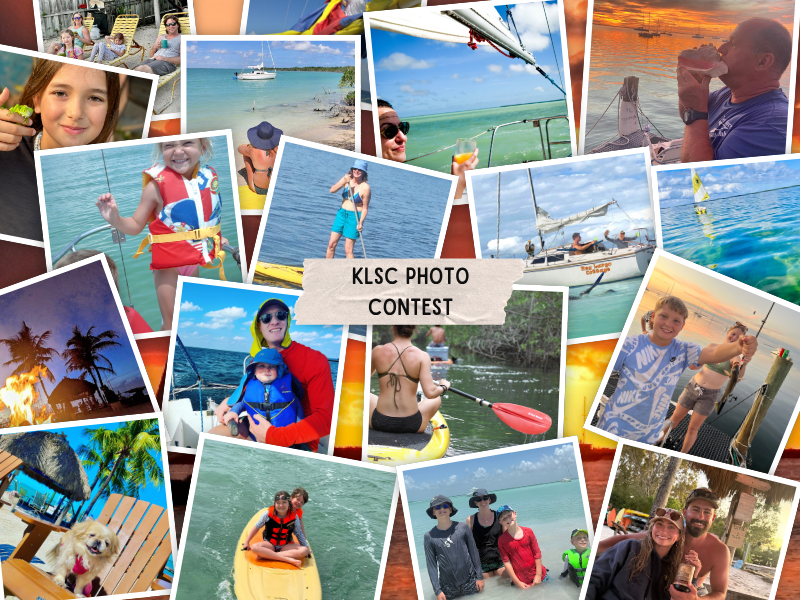
To our past and present guests: Here’s a chance to come back and vacation at KLSC for free! Send us pictures of your stay here and win a free 3-night stay by participating in our 15th Annual KLSC Photo Contest. Check here for details.
Got a talent for video making? Enter our 12th Annual KLSC Video Contest and get a chance to win a free 5-night stay! Check here for details.
We at Key Largo Cottages at Key Lime Sailing Club love our guests and we would love to see you back again for another fun-filled and relaxing Florida Keys vacation!
Enjoy a Snorkel or Sunset Cruise both bay side and ocean side as well as sailboat rentals from 22 foot to 40 foot through Morning Star Sailing Charters. Call us at 305-451-7057.































Be the first to comment!